Essential Moving Supplies: A San Antonio Checklist
The moving supplies that actually matter for a San Antonio or Hill Country move — what to buy, what to skip, and where to find boxes nearby. Start your list.
Planning a move? Start your free quote — under 2 minutes
Most moving-supply lists tell you to grab tape and boxes and call it done. That’s how you end up with ten boxes for towels and none for books. A San Antonio move — whether you’re headed across town to Stone Oak or out to a place near Bandera — goes a lot smoother when you match the supply to the job before you start taping anything shut.
This checklist covers what actually earns a spot in your pile, what you can skip, and a few things that matter more in Texas heat than they do anywhere else.
How Many Boxes Do You Actually Need?
There’s no single right number, but these ranges give you a starting point:
| Home size | Typical box range |
|---|---|
| Studio or 1-bedroom apartment | 20–40 boxes |
| 2–3 bedroom house | 60–100 boxes |
| 4+ bedroom house | 100+ boxes |
Add more if you’ve lived somewhere for years or tend to collect things. Use fewer if you’ve already decluttered. Either way, it’s better to have a few extra flattened boxes in the garage than to run out at 8 p.m. the night before your movers arrive.
Match the Box to the Item
- Small boxes — books, canned goods, tools, anything dense and heavy
- Medium boxes — kitchen items, toys, décor, most everyday belongings
- Large boxes — bedding, pillows, lampshades, and other bulky but light items
- Dish-pack boxes — plates, glassware, and stemware, ideally with built-in dividers
- Wardrobe boxes — hanging clothes you don’t want to fold
The Supplies People Forget
- Packing paper, which is better than newspaper because it won’t leave ink smudges on your things
- Bubble wrap for anything with a screen, hinge, or glass
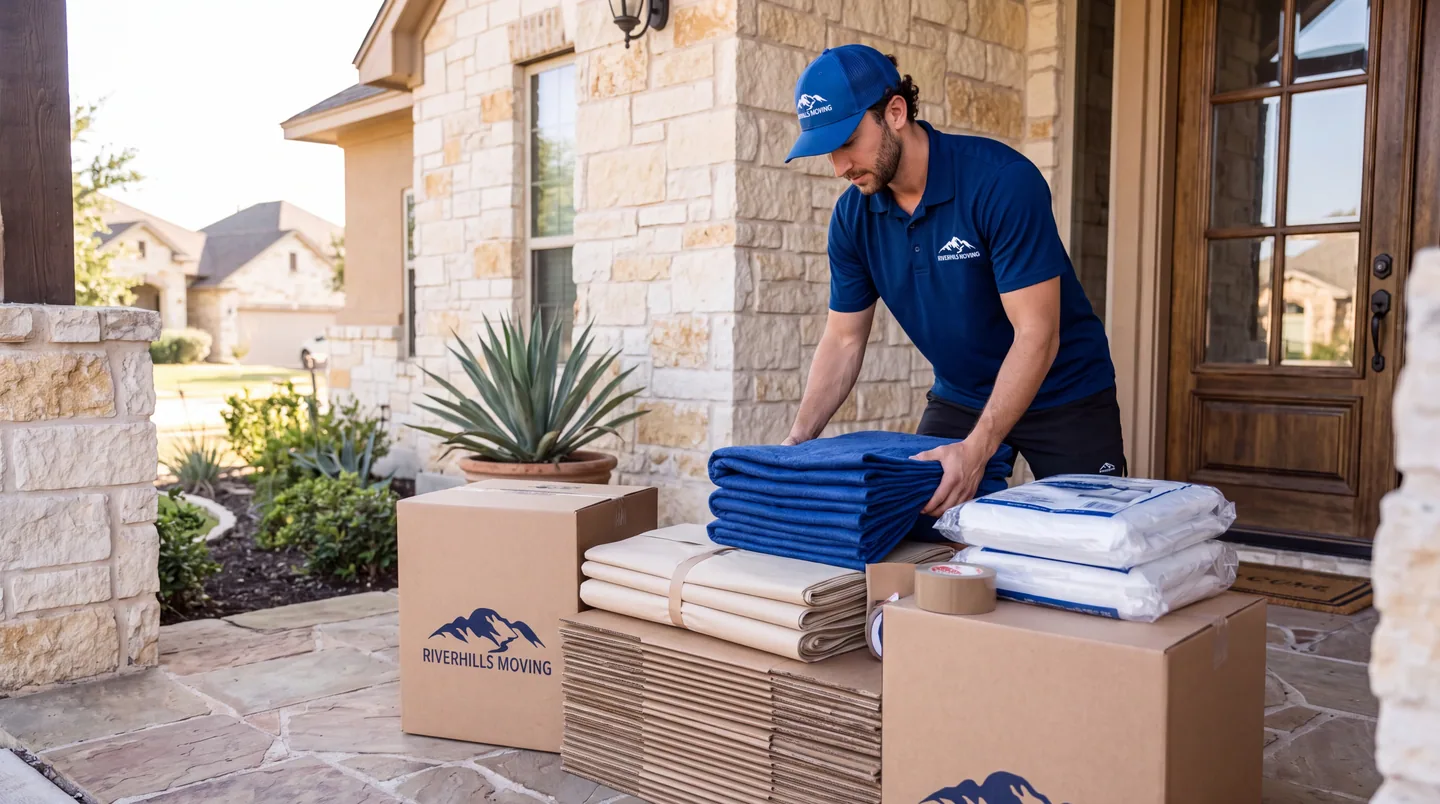
- Furniture pads or moving blankets for tabletops, dressers, and mirrors
- Mattress bags to keep mattresses clean and protected off the truck floor
- A few thick permanent markers and a roll of labels — not just tape
What Texas Heat Does to a Moving Truck
By midsummer, the inside of a closed moving truck sitting in a San Antonio driveway climbs well past what your air-conditioned house feels like. That matters for a few specific things:
- Candles and anything wax-based can melt or warp.
- Electronics left in a hot truck for hours can be damaged. Carry laptops, monitors, and game consoles in your own vehicle when you can.
- Vinyl records warp in heat the same way electronics do — treat them the same, not like ordinary books.
- If you’re loading in summer, an early-morning start beats an afternoon one, before the truck has had hours to bake in the sun.
Tape Matters More Than You Think
Not all tape holds up the same way. Skip duct tape and household cellophane tape — both tend to peel off cardboard within a day, especially in Texas heat. Look for a 2-inch packing tape and, if you’re packing more than a handful of boxes, a hand-held tape gun. It sounds like overkill for a few rolls of tape, but sealing dozens of boxes by tearing tape off a bare roll is slow and your hands will feel it by the end of the day.
A Labeling System That Actually Saves Time
Writing “kitchen” on a box helps a little. Writing “kitchen — everyday dishes, not fragile” helps a lot more. A simple system works best:
- Pick one color of marker or sticker per room and stay consistent.
- Note the room on two sides of the box, not just the top, so you can read it while boxes are stacked.
- Add “fragile” and which way is up on anything breakable, and mean it — don’t mark every box fragile just in case, or movers can’t tell which ones actually need extra care.
What You Can Skip
Not everything sold as a “moving supply” earns its spot on your list. Specialty shaped boxes for single items, printed pre-labeled box sets, and single-use plastic wrap for furniture you’re already covering with a blanket are easy to skip. Save the budget for the things that actually protect your belongings: sturdy boxes, real tape, and padding for anything fragile.
Where to Find Supplies Locally
You don’t have to buy everything new. H-E-B and local hardware stores often have free boxes if you ask at the right time. For sturdier options, U-Haul locations in Kerrville and Boerne carry wardrobe and dish-pack boxes, and office-supply stores sell bubble wrap and tape by the roll. If you’d rather skip the supply run altogether, RiverHills’ packing services bring wardrobe boxes, dish packs, and blankets with the crew — one less list to manage yourself.
A Simple Rule for Fragile Items
If you’re not sure whether something needs bubble wrap or just paper, ask yourself this: would it survive being dropped from waist height onto a driveway? If the answer is no, wrap it properly instead of just tossing it in a box with padding around the edges.
Whether you’re moving a two-bedroom apartment in San Antonio or a home out toward Bandera, having the right supplies on hand before moving day removes a good chunk of the stress. If you’d rather have a crew bring the supplies and do the packing for you, contact us or call (830) 329-7272 for a free, no-obligation quote.
Official references
These agency resources inform the regulatory, safety, and planning guidance in this article. Local conditions and availability can change, so verify current details with the source.
Frequently Asked Questions
What belongs in a moving essentials box? add
Pack toiletries, medications, phone chargers, a few days of clothes, basic tools, and snacks in a box you keep with you, not on the truck. This gets you through the first night or two before anything else is unpacked.
How does professional packing help? add
A trained crew matches the right box to each item, wraps and labels as they go, and gets a full home packed in a fraction of the time most families spend doing it alone. It also cuts down on surprises with awkward items like mirrors, lamps, and electronics.
Roughly how many boxes does a typical home need? add
A smaller apartment usually needs a few dozen boxes, while a larger multi-bedroom house can need well over a hundred. It depends more on how long you have lived there and how much you have decluttered than on square footage alone.
Planning a move? Talk to a real person.
RiverHills Moving is locally owned and owner-operated by Jackson Williams, serving San Antonio and the Texas Hill Country. Free quotes, no pressure.
Get a Free Quote arrow_forwardor call (830) 329-7272