How to Move a Gun Safe Safely (Without Injury)
Gun safes are heavy, top-heavy, and dangerous to DIY. See why San Antonio gun-safe movers use the right gear to protect your floors and back. Get a quote.
Planning a move? Start your free quote — under 2 minutes
November in San Antonio means one thing to a lot of households: deer season is on. The lease is paid, the rifles are cleaned, and somewhere in the garage or the closet sits a gun safe that needs to go somewhere else. Maybe you bought a bigger one. Maybe you are moving before the holidays. Either way, a gun safe is the heaviest, most awkward thing most people ever try to move, and it hurts people every year. Here is how to move one without a trip to the ER, a cracked tile floor, or a safe lying on its back in the driveway.
Why a Gun Safe Is So Hard to Move
A gun safe does not behave like other heavy furniture. A full-size long-gun safe usually weighs 500 to 1,000 pounds empty, and a premium model with thick steel and a fire liner can top 1,200. That is more than a piano, packed into a smaller, taller box.
The real problem is where that weight sits. A tall safe is top-heavy, so the moment you tip it even a few degrees, all that mass wants to keep going. It does not creak or warn you. It just goes. That is how fingers get crushed and floors get punched through in a second.
Why DIY Gun Safe Moves Send People to the ER
Every hunting season, somebody decides that four buddies and a hand truck can handle it. Sometimes it works. Often it does not.
Here is what goes wrong when people move a gun safe themselves:
- Backs and knees. Lifting a 700-pound object by hand is how people herniate discs and blow out knees.
- Crushed feet and fingers. When a top-heavy safe shifts, hands and toes are the first casualties. Steel does not care.
- Stairs. A safe going down a staircase without the right gear can turn into a runaway. There is no stopping it once it gains momentum.
- The drop. A dropped safe can crack a slab, gouge hardwood, or land on a foot. It can also throw the door mechanism out of alignment and lock you out of your own safe.
The equipment is not cheap to rent for a day, and it takes training to use right. That is the honest reason DIY goes sideways.
The Right Equipment for the Job
Trained crews do not muscle a safe. They out-tool it. A proper gun safe move uses gear built for exactly this:
- A safe jack or heavy-duty appliance dolly rated well above the safe’s weight, not the light dolly from the garage.
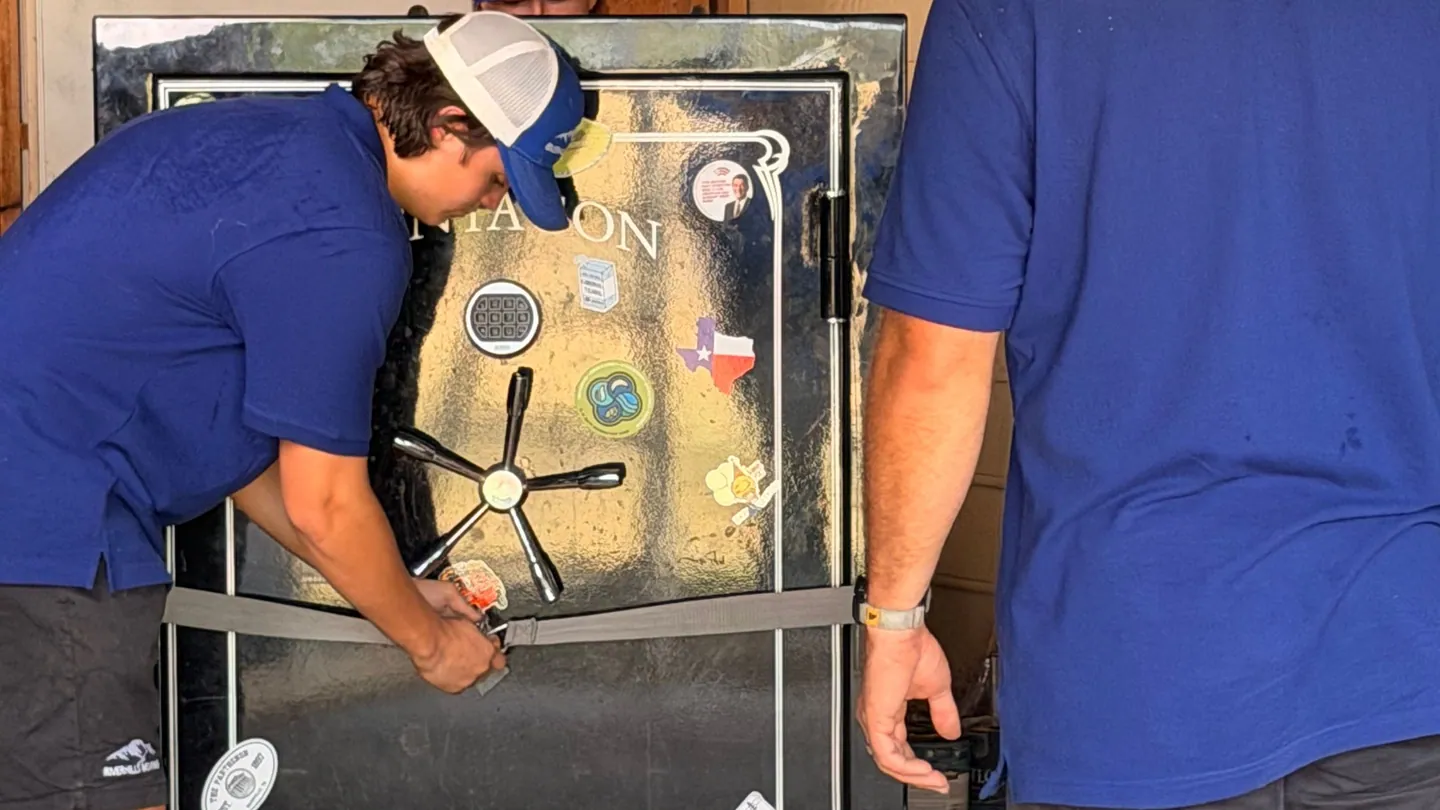
- Straps and ratchets that lock the safe to the dolly so it cannot shift or tip.
- Stair-climbing equipment for two-story homes, so the load is controlled one step at a time.
- Furniture pads and corner protection for the finish, the door, and the handle.
- Floor protection laid down along the entire path before the safe moves an inch.
With the safe strapped down and the weight kept low, four trained movers can guide 800 pounds through a house calmly. That is the whole difference. Our safe moving service is built around this equipment and the crews trained to use it.
Protecting Your Floors and Door Frames
San Antonio homes are full of surfaces a gun safe loves to destroy. The tile and luxury vinyl that is everywhere in Stone Oak and Alamo Ranch chips if a safe corner touches down wrong. The hardwood in older Monte Vista and Alamo Heights homes dents deep. And the narrow, turned doorways in those 1920s neighborhoods were never sized for a 30-inch steel box on a dolly.
A good crew walks the route first. They measure the tightest doorway, plan the turn out of the closet, and lay protection down the whole path before the safe moves. Nothing gets dragged. That is how your floors and frames survive the day.
Stairs, Gated Communities, and Hill Country Access
The path to the truck is often the hardest part. A safe living in an upstairs office or a bonus room means a full staircase descent, and that is exactly where DIY moves get dangerous. Trained movers bring stair equipment and enough people to keep the load under control the entire way down.
Access outside the house adds its own wrinkles. Gated communities like The Dominion and Cibolo Canyons often need a certificate of insurance and a check-in at the guard house before the truck rolls up. In the Hill Country, homes in Boerne, Fair Oaks Ranch, and Comfort sit up on limestone grades with long caliche driveways, so the carry to the truck can run fifty feet or more. After a wet fall, a low-water crossing on the Guadalupe or Medina can reroute the truck. A crew that knows Boerne and the Hill Country plans for all of it before moving day instead of discovering it in the driveway.
Moving a Safe During a PCS or a Long Move
Plenty of gun safes belong to military families. If you are PCSing out of JBSA, your safe is one of the heaviest items in the household, and it needs the same careful handling whether it is headed to base housing in Schertz or across the country. A bolted-down safe has to be unbolted correctly, and it should ride secured and upright, never laid flat where the door can shift. Our military and PCS moving crews handle safes as part of the household, and on any long-distance move that safe gets strapped in and padded for the full haul.
Before any move, empty the safe. Take out every firearm, all ammunition, and any valuables and carry them yourself. It drops the weight, keeps ammo out of a hot Texas truck, and keeps things simple for the crew.
Leave the Heavy Lifting to the Pros
A gun safe is one of the few things in your house where doing it yourself is truly dangerous, not just inconvenient. The gear costs about as much to rent as it does to hire trained help, and the risk of a crushed foot, a wrecked floor, or a busted safe is real. RiverHills Moving handles gun safe moves across San Antonio and the Hill Country with the right equipment and crews who move heavy things for a living.
Got a safe to move this season? Call RiverHills Moving at (830) 329-7272 or request a free, no-obligation quote. We will walk the route, tell you honestly what it takes, and put the plan in writing before we ever touch the safe.
Official references
These agency resources inform the regulatory, safety, and planning guidance in this article. Local conditions and availability can change, so verify current details with the source.
Frequently Asked Questions
How much does a gun safe weigh? add
A small pistol safe might weigh 100 pounds, but a full-size long-gun safe usually runs 500 to 1,000 pounds empty, and premium models with thick steel and fire lining can top 1,200 pounds. That weight also sits high and shifts the moment you tilt the safe, which is what makes it dangerous to move by hand.
Can two people move a gun safe? add
For anything larger than a small pistol box, no. Two people cannot control 600-plus pounds on a ramp or a staircase, and one slip can crush a foot or throw out a back. A trained crew uses a safe jack or heavy-duty dolly, straps rated for the load, and enough hands to keep the weight centered the whole way.
Do I need to empty my gun safe before it is moved? add
Yes. Remove all firearms, ammunition, and valuables and transport them yourself. It lowers the weight, removes any legal gray area for the crew, and keeps ammo out of a hot truck. Store firearms and ammo separately in your own vehicle for the drive.
Will moving a gun safe damage my floors? add
It can if it is dragged or tipped without protection. Our crews lay down floor protection, pad the safe, and roll it on equipment built for the weight so your tile, hardwood, and door frames come through clean.
Planning a move? Talk to a real person.
RiverHills Moving is locally owned and owner-operated by Jackson Williams, serving San Antonio and the Texas Hill Country. Free quotes, no pressure.
Get a Free Quote arrow_forwardor call (830) 329-7272