verified Request a move-specific estimate and review the written scope before booking.
Education, Civic & Community

Trade School Moving in San Antonio & the Hill Country

Keep each training bay's benches, parts bins, and teaching materials together while your equipment mover handles the heavy shop tools.

(830) 329-7272
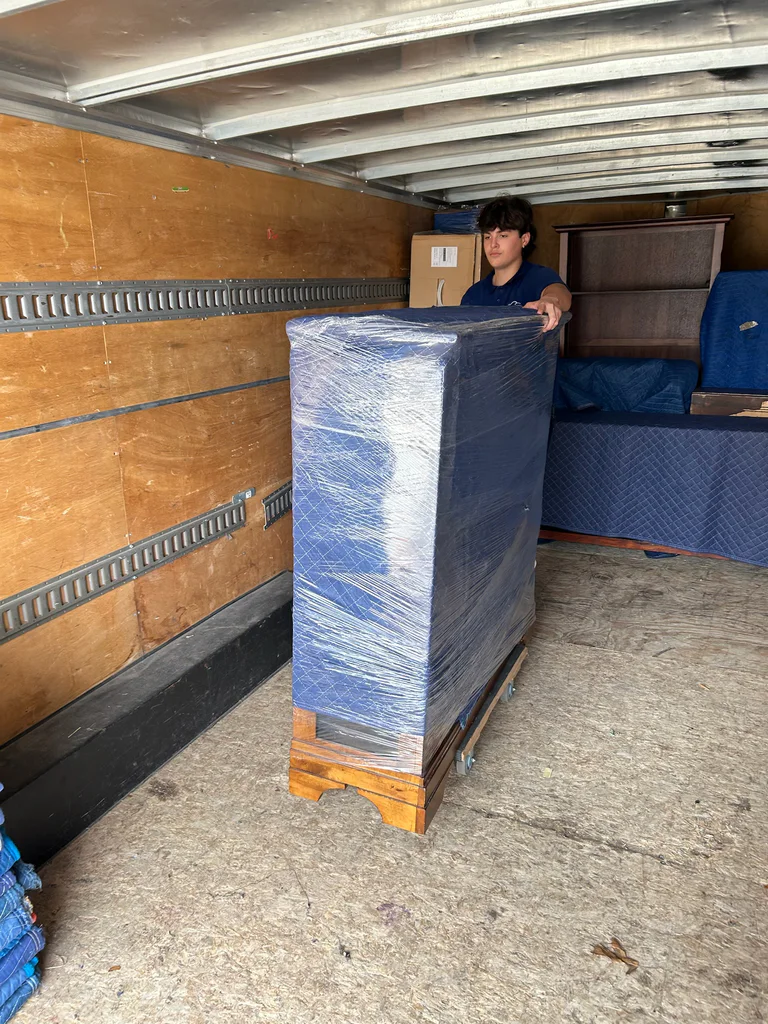
Trade School moving in San Antonio: moving crew at work
  • Licensed & Insured USDOT 3561425 · MC-1196218
  • 5.0 ★ Rated 500+ Google Reviews
  • San Antonio & Hill Country Kerrville · Boerne · Fredericksburg

Start your free trade school move quote

verified For estimate purposes only credit_card_off No credit card required

Planning a Trade School Move

Students learn a trade in the order the shop is laid out. A welding booth, automotive bay, or construction lab has a teaching sequence built into its layout: demonstration bench, student work positions, shared tools, and parts stock. Your director schedules each program's pause. Instructors assign movable pieces by bay and heavy tools to the equipment mover.

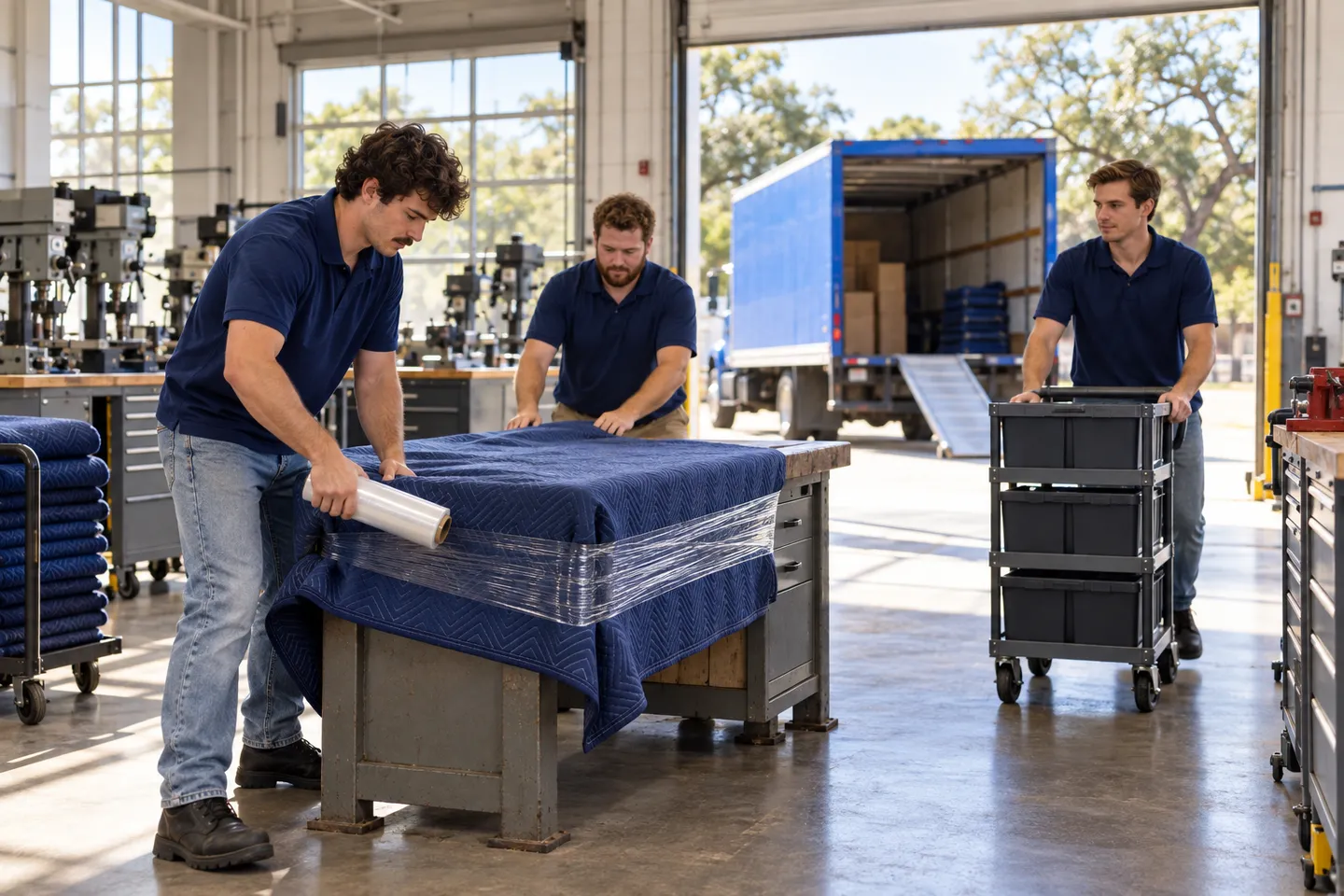
We can move released workbenches, rolling tool cabinets, parts bins, classroom tables, and boxed teaching supplies. Before loading, we compare the old bay map with the receiving shop layout. Each bench gets a program and destination bay label; small parts follow instructor categories. Our crew places those contents around positions reserved for equipment handled separately.

The school's equipment mover owns the heavy shop tools and their transport plan. We coordinate loading order with that contact so benches and cabinets do not obstruct the equipment path. Classrooms and the front office travel on their own labels, so a carton of course binders never ends up on a shop floor.

Who usually signs off
School director or facilities lead, with program instructors confirming the shop inventory and receiving layout
Timing that works
Choose a window around practical exams, active lab sessions, and the next course start; confirm when each shop bay can be released.

What typically moves

  • Freestanding instructor demonstration benches We mark the destination teaching position and assess each bench's size and route before it joins the moving load.
  • Student workbenches and shop stools Bay labels keep a practical classroom's work positions together, even when the new shop has a different layout.
  • Rolling tool cabinets and shadow boards Instructors identify the contents and secure drawers; loose hand tools are packed to the cabinet or board they belong with.
  • Parts bins and consumable stock Your program lead decides the sorting scheme. We box approved contents by shelf and place them beside the receiving bay.
  • Portable welding screens and training dividers Freestanding screens and dividers travel as labeled bay groups, with bases and removable pieces kept together.
  • Classroom drafting tables and course materials Teaching rooms use their own destination labels so paper plans and classroom pieces do not enter the shop unloading area.

Access and scheduling

Skills assessments may continue after lectures finish, while a new class may need the shop before the office is ready. Program leads tell us which bays can close and in what order. An evening or weekend window is available to discuss on request; we check that window with the equipment mover's access plan.

We walk shop entrances separately from classroom corridors. Overhead doors, ramps, threshold changes, and parking affect where benches can travel. The school identifies areas that must remain open for instruction. The equipment mover needs a clear path and staging space, so benches and bins can arrive after its route is clear. A leased training suite may have landlord loading hours or a Certificate of Insurance requirement. Your director confirms purchasing approval and building access before dates are set.
Protection and handling

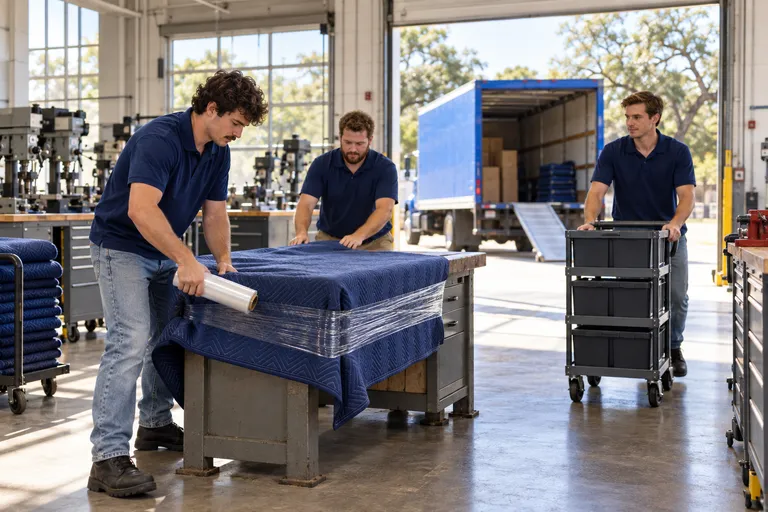
Instructors release benches and cabinets for our load. Work surfaces are cleared, loose attachments identified, and small hardware bagged with the matching bench. We pad exposed edges and check the doorway route before carrying each piece. Rolling tool cabinets are secured after the school decides which contents can stay inside.

Parts stock needs the instructor's labels, not just room numbers. We can pack approved consumables by bay, cabinet, and shelf so the receiving floor follows the teaching order. School staff identify restricted, hazardous, or personally owned materials and keep control of them. At delivery, we place benches and cartons on the receiving map while leaving heavy tool positions and the equipment path open. The equipment mover handles those tools and tells us when surrounding spaces are available for placement.

Who does what

Some of this job belongs to other trades. The written plan names each one.

Heavy shop tools and installed training equipment
Your equipment mover assesses, prepares, transports, and positions these pieces. Our crew places released benches, cabinets, and cartons around the equipment plan.
Attached services and fixed shop fixtures
The school's licensed trades or equipment vendors disconnect and restore attached services and decide what can be released from the building. We handle only items cleared for ordinary transport.
Shop inventory and destination bay assignments
Your instructors identify tools, parts categories, and teaching positions. We follow their labels and flag any piece without an assigned destination before loading.

Not part of our work

  • Disconnecting attached shop services or removing fixed fixtures; the school's licensed trades or equipment vendors perform that work.
  • Sorting hazardous materials, restricted stock, or students' personal tools; school staff decide what can enter the moving load.

Around San Antonio and the Hill Country

A San Antonio training shop near Port San Antonio or Brooks may combine an overhead shop entrance with classrooms reached through a separate corridor. In Boerne, Kerrville, or another Hill Country town, the receiving program may occupy a different kind of building. We check the actual bay doors and classroom route at both addresses before assigning the order of benches, cabinets, and cartons.

The crew that shows up

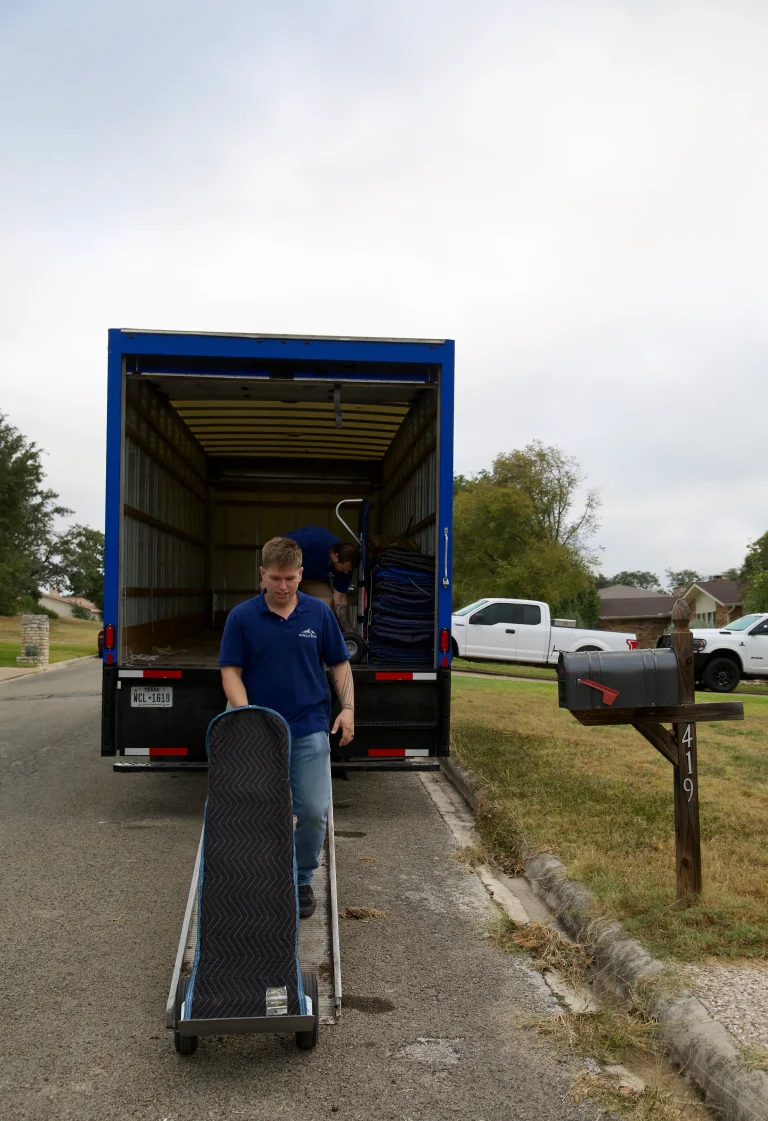
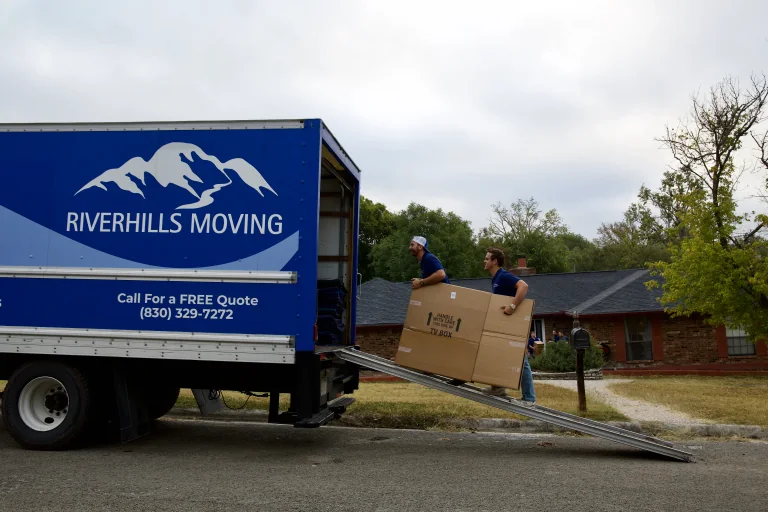
Crew loading the box truckCrew carrying pad-wrapped furniture to the truckLoaded hand dolly at the truck ramp

Trade School Moving FAQs

Another question? Call (830) 329-7272.

Should our equipment mover arrive before the training benches?

That depends on the receiving bay. If a heavy tool needs the clearest route through the overhead door, schedule its equipment mover before we place the surrounding benches and bins. Your program lead and equipment mover set that sequence on the receiving layout. We then load our assigned pieces in the order the bays become available.

How do we keep hand tools with the correct student work bay?

Have each instructor identify the bay and the cabinet or board where the hand tools belong. We can pack released tools in closed, labeled containers and keep those containers with the matching movable storage piece. Your staff decides what is school property and what students take themselves. A destination bay map lets the crew place each group without guessing from tool type alone.

Can one program keep teaching while another shop is moved?

We can plan the work by program if the school can release separate bays and provide a clear route for the crew. Your director and instructors decide where instruction continues and which entrances students still use. We stage the moving load away from active work areas and confirm when the equipment mover needs the shared shop path.

What should we decide before the new training floor receives parts bins?

Give each program lead the new bay plan and ask them to assign cabinet and shelf destinations for parts stock. They should also identify stock that needs separate handling or should remain with school staff. We can box approved consumables using those categories and place each carton at its assigned bay, leaving instructors to check quantities and set the final teaching layout.

Plan your business move

Tell us both addresses, the building rules you know about, and the dates you cannot move. We will send back a written plan and estimate.

Call (830) 329-7272

Mon–Fri 8 AM–6 PM · Sat 9 AM–4 PM · Sun Closed

Call Now call 830-329-7272