
Moving to San Antonio from Chicago
Relocating from Chicago, IL to San Antonio or the Texas Hill Country? RiverHills — based in Boerne & Kerrville — receives and delivers your move on our own trucks and crews, with one accountable team from load to unload.
Rated 5.0★ from 500+ Google Reviews across our Kerrville, Boerne, Bulverde & Helotes locations. Licensed & insured — USDOT 3561425 · MC-1196218.
Why people move from Chicago to San Antonio
The Chicago → San Antonio move
The Chicago-to-San Antonio corridor runs roughly 1,190 miles — typically down I-55 through Springfield and St. Louis, then southwest via I-44 toward Oklahoma and down I-35 through Dallas and Austin into San Antonio. It is a two-day drive for the truck under normal conditions, and it crosses several weather zones: crews often load in an icy Chicago January and unload in a mild Texas afternoon two days later. Because winter storms across Missouri and Oklahoma can close interstates with little warning, we build realistic delivery windows into every long-distance quote rather than promising a same-hour arrival.
RiverHills is based in the Texas Hill Country, in Boerne and Kerrville, and serves San Antonio as home turf, so your shipment is arriving where our crews work every day — not being handed to a stranger at the far end. We coordinate the load-out in the Chicago area, keep the same point of contact through transit, and handle the delivery ourselves into Stone Oak, Alamo Heights, downtown, the northern suburbs, or out into Boerne, New Braunfels, and the surrounding Hill Country. Long, narrow ranch driveways, gated communities, and third-floor walk-ups all get planned for before the truck rolls, so delivery day into the San Antonio area is calm instead of improvised.
What changes when you move from Chicago
The cost-of-living gap is the first thing Chicago movers feel. San Antonio runs well below the national average while Chicago sits above it, and the difference shows up in groceries, dining, childcare, and especially housing: the money that buys a modest condo in Lakeview or a bungalow in Portage Park stretches into a substantially larger, newer single-family home with a yard in Stone Oak, Alamo Ranch, or Cibolo. For families coming from the North Shore or west suburbs like Naperville, the trade is often a comparable house for meaningfully less — or a much bigger house for the same money.
Taxes are where the math really shifts. Illinois charges a flat 4.95% state income tax and Chicago layers on a 10.25% sales tax, while Texas has no state income tax at all and a lower combined sales-tax rate. Be honest about one thing: Texas leans on property taxes to make up for it, and Bexar County rates are not low — but the absence of an income tax, plus a homestead exemption you should file for right away, usually leaves former Chicagoans keeping more of what they earn. Renters and high earners tend to see the biggest swing in their favor.
Then there is the weather and the pace. Chicago's brutal winters — lake-effect snow, polar-vortex cold snaps, months of gray — give way to San Antonio's mild, short winters and long warm seasons; the honest tradeoff is genuinely hot, humid summers with stretches over 100 degrees and the AC running hard from May to September. Day to day, San Antonio feels slower and more spread out than dense, transit-dependent Chicago: you will drive more, but commutes are shorter, parking is easy, and the frantic edge of the Loop softens into River Walk dinners, Spurs games, and easy weekend escapes into the Hill Country.
Where Chicago transplants land in the San Antonio area
Chicago transplants tend to sort themselves by which version of Chicago they're recreating. Families chasing the Naperville or Schaumburg experience — top-rated schools, master-planned neighborhoods, newer construction — gravitate to Stone Oak and the far North Side, plus Alamo Ranch and the suburbs of Cibolo, Schertz, and Boerne. Those who loved the walkable, established feel of Oak Park or Evanston land in Alamo Heights or Terrell Hills, where mature trees, older homes, and a real downtown scratch the same itch. And former Lincoln Park and West Loop residents who want urban energy cluster around the Pearl District and downtown, near the River Walk, restaurants, and nightlife.
If it's space and quiet you're after, the Hill Country pulls a lot of Chicagoans north and west: Boerne, Fair Oaks Ranch, and the Kerrville area offer acreage, hills, and small-town character, while New Braunfels along the Comal and Guadalupe rivers has become a magnet for growing families. A few practical things to know as a newcomer: file your homestead exemption as soon as you close to blunt those property taxes, budget for real air conditioning and a higher summer electric bill, understand that you'll need a car for nearly everything since transit is limited compared to the CTA, and get used to HOAs — they're far more common here than in most Chicago neighborhoods. You'll also want to update your Texas driver's license and vehicle registration within 90 days of the move.
Tips for the Chicago → San Antonio move
Everything your move to San Antonio needs
One accountable crew handles packing, loading, transport, and setup for your Chicago → San Antonio relocation.

Local Moving
Full-service local moving for homes, apartments, and condos across San Antonio, Boerne, Kerrville, and the Texas Hill Country.
Learn more arrow_forward
Long-Distance Moving
Interstate and cross-Texas moves out of San Antonio and the Hill Country under our own USDOT & MC authority.
Learn more arrow_forward
Commercial & Office Moving
Office, retail, and business relocations across San Antonio with minimal downtime.
Learn more arrow_forward
Packing Services
Full or partial professional packing, unpacking, and premium materials to protect what matters.
Learn more arrow_forward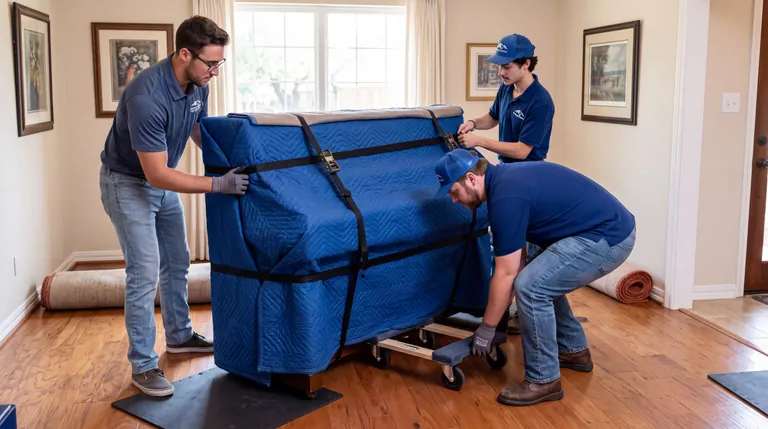
Piano & Specialty Moving
Careful handling for pianos, gun safes, and heavy or high-value specialty items.
Learn more arrow_forward
Senior Moving
Patient, compassionate downsizing and senior relocation with full-service packing and setup.
Learn more arrow_forwardMoving to San Antonio from Chicago: FAQ
How long does a move from Chicago to San Antonio take? expand_more
The drive is roughly 1,190 miles and typically takes the truck about two days under normal conditions. Because winter weather across Missouri and Oklahoma can close interstates, we quote a realistic delivery window rather than a single guaranteed hour. When we schedule your Chicago load-out, we'll walk you through the expected delivery day into San Antonio or the Hill Country so you can plan around it.
Is RiverHills licensed to move me across state lines from Illinois to Texas? expand_more
Yes. RiverHills holds active interstate household-goods authority — USDOT 3561425 and MC-1196218 — along with Texas intrastate authority TxDMV 009770506C. That means your Chicago-to-San Antonio move is handled under our own operating authority and crews, not brokered out to whoever's cheapest, from load-out to delivery.
Will my furniture be okay traveling through winter weather across the Midwest? expand_more
Our trucks aren't climate-controlled, but everything is professionally pad-wrapped, blanket-wrapped, and secured for the long haul, which is what protects furniture over a 1,190-mile trip. Cold and dry transit is generally easy on household goods; the bigger variables are road conditions and timing, which is exactly why we build weather-aware delivery windows into every long-distance quote.
Do I really come out ahead on taxes moving from Illinois to Texas? expand_more
Most people do. You lose Illinois' flat 4.95% state income tax entirely and Chicago's 10.25% sales tax drops to a lower Texas rate. Texas offsets this with higher property taxes, and Bexar County's aren't low — but after filing your homestead exemption, the combination of no income tax and lower sales tax usually leaves former Chicagoans keeping more of their paycheck, especially renters and higher earners.
Planning your move to San Antonio?
Share your Chicago origin, your San Antonio-area destination, target date, and inventory so the team can scope your estimate.