Moving to San Antonio from Dallas
Relocating from Dallas, TX to San Antonio or the Texas Hill Country? RiverHills — based in Boerne & Kerrville — receives and delivers your move on our own trucks and crews, with one accountable team from load to unload.
Rated 5.0★ from 500+ Google Reviews across our Kerrville, Boerne, Bulverde & Helotes locations. Licensed & insured — USDOT 3561425 · MC-1196218.
Why people move from Dallas to San Antonio
The Dallas → San Antonio move
The Dallas-to-San Antonio move is a straight run of roughly 275 miles down I-35, and it is one of the most heavily traveled relocation corridors in Texas. A load leaving Dallas picks up I-35E south through Waxahachie and merges with I-35W at Hillsboro, then rolls through Waco, Temple, and Belton before reaching Georgetown and Round Rock. From there it threads directly through downtown Austin — the single worst bottleneck on the route — before opening back up past San Marcos and New Braunfels and descending toward the Balcones Escarpment into San Antonio. Door to door the drive is about 4.5 to 5.5 hours depending on how the Austin stretch is flowing, which makes it a comfortable one-day, load-and-deliver move in most cases.
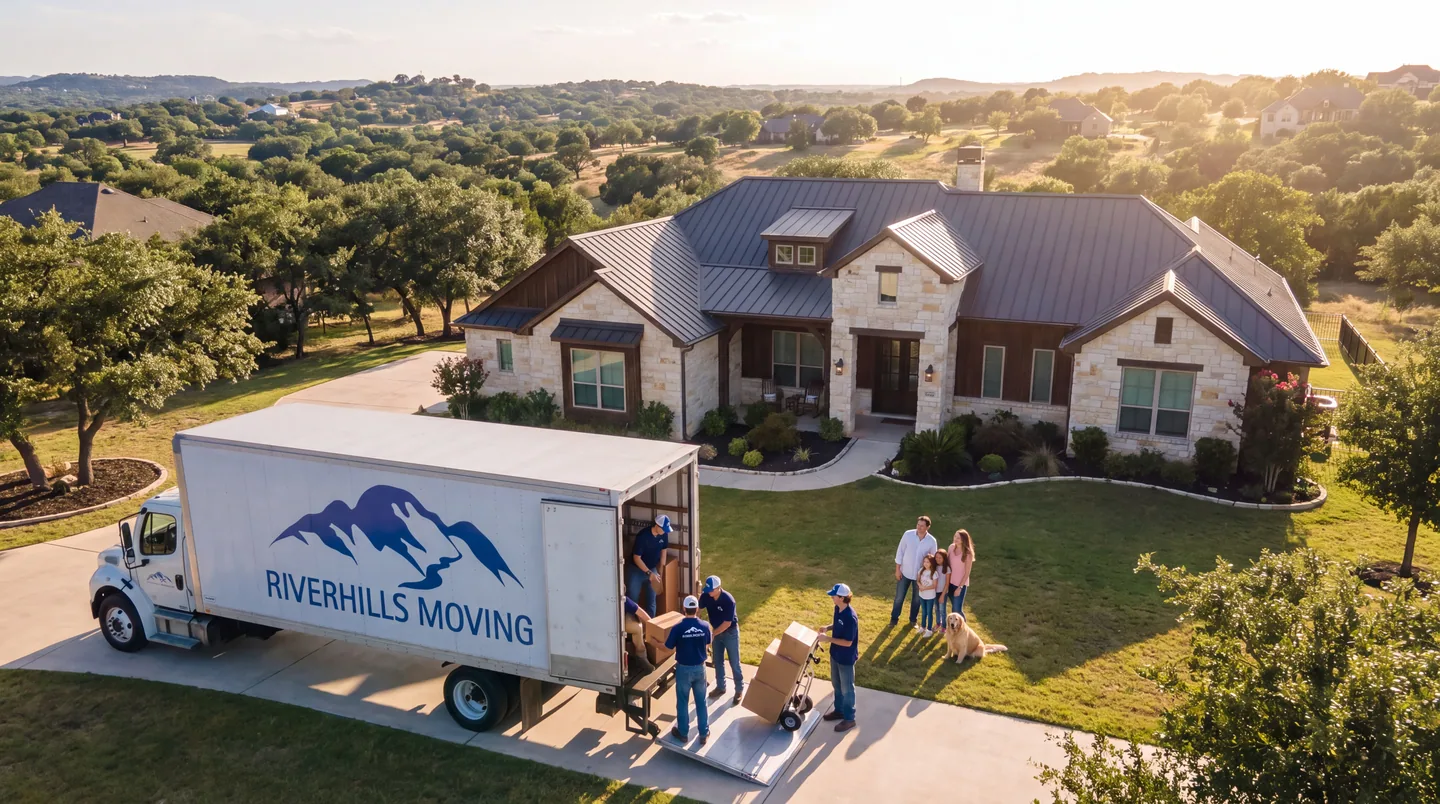
San Antonio and the Hill Country are RiverHills' home turf, so this is an inbound move onto ground the crew knows cold. Jackson Williams and the RiverHills team stage out of Boerne and Kerrville, meet the truck on arrival, and deliver anywhere across the metro — Stone Oak and Alamo Heights, downtown and the Pearl, out to the family suburbs of Schertz, Cibolo, and Bulverde, and into the gated Hill Country communities of Fair Oaks Ranch, The Dominion, and Cordillera Ranch. Everything moves in a single clean, padded, blanket-wrapped truck and stays in-house rather than being handed off to a broker. When a Dallas sale closes before a San Antonio home is ready, RiverHills offers storage-in-transit so belongings stay secured until delivery day.
What changes when you move from Dallas
The headline difference is cost. San Antonio is one of the most affordable big cities in the United States, and Dallas — especially the booming Collin and Denton County suburbs — is not. The same budget that buys a modest home in Frisco, Prosper, or McKinney reaches a larger house, or one on genuine Hill Country acreage, around San Antonio, and rents run lighter too. Newcomers who sell into DFW's higher values and buy in San Antonio frequently pocket the difference, which is a big part of why this corridor runs so heavily southbound.
Taxes are a wash in one sense and a win in another. Both cities sit in Texas, so neither charges a state income tax, and property-tax rates are high statewide. But North Texas layers MUD and PID special-district assessments onto many of its newer master-planned neighborhoods, and combined with higher home values, that pushes annual tax bills in the Dallas suburbs well above what a comparable San Antonio home carries. The amount you actually write to the county tends to be smaller down south, even before you protest your appraisal — which, in fast-growing Bexar County, you should plan to do.
Climate and pace round out the contrast. Dallas summers are hot, but North Texas sits squarely in spring hail-and-tornado alley and takes harder winter freezes and ice storms; San Antonio trades some of that severe-weather risk for hotter, longer summers and much milder winters, with Hill Country flash flooding as the main seasonal watch-out. The day-to-day feel shifts noticeably too: Dallas is a fast, corporate, sprawling metro organized around its tollways, while San Antonio moves at a more relaxed, culturally rooted pace with shorter commutes and a strong sense of place.
Where Dallas transplants land in the San Antonio area
Dallas transplants tend to sort themselves by what they left behind. Families coming from the North Dallas suburbs gravitate to Stone Oak and the far-north side, whose master-planned, good-schools feel echoes Plano and Frisco, or to the family suburbs of Schertz, Cibolo, and Bulverde. Those leaving the Park Cities — Highland Park and University Park — often land in Alamo Heights, Terrell Hills, or Olmos Park, San Antonio's established, tree-lined old-money enclaves, while buyers chasing space and views head into the Hill Country proper: Boerne, Fair Oaks Ranch, The Dominion, and Cordillera Ranch, or out to New Braunfels and Canyon Lake for the river-and-lake lifestyle.
A few practical things surprise newcomers from Dallas. San Antonio has no light-rail equivalent to DART — VIA runs buses, but the metro is even more car-dependent, so plan commutes accordingly. Summers deliver more 100-degree days than North Texas, and Edwards Aquifer watering restrictions govern lawns during dry stretches. Fiesta takes over the city each April and closes streets downtown, flash-flood low-water crossings on the Guadalupe and Medina rivers are a real Hill Country hazard, and many of the gated and HOA communities newcomers favor require a certificate of insurance and scheduled gate access on move day — worth arranging before the truck arrives.
Tips for the Dallas → San Antonio move
Everything your move to San Antonio needs
One accountable crew handles packing, loading, transport, and setup for your Dallas → San Antonio relocation.

Local Moving
Full-service local moving for homes, apartments, and condos across San Antonio, Boerne, Kerrville, and the Texas Hill Country.
Learn more arrow_forward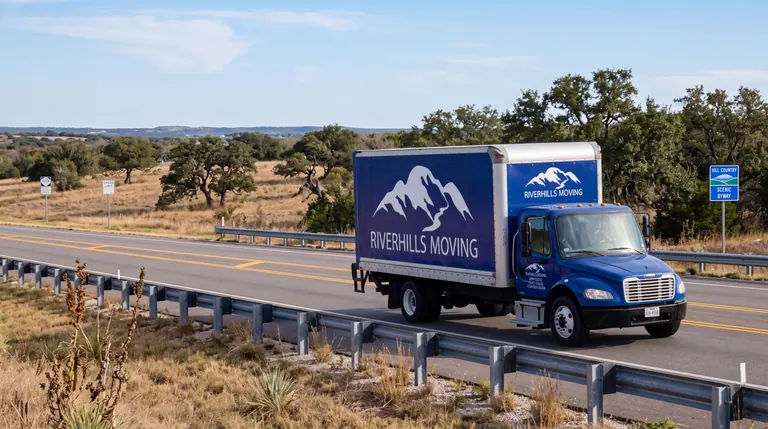
Long-Distance Moving
Interstate and cross-Texas moves out of San Antonio and the Hill Country under our own USDOT & MC authority.
Learn more arrow_forward
Commercial & Office Moving
Office, retail, and business relocations across San Antonio with minimal downtime.
Learn more arrow_forward
Packing Services
Full or partial professional packing, unpacking, and premium materials to protect what matters.
Learn more arrow_forward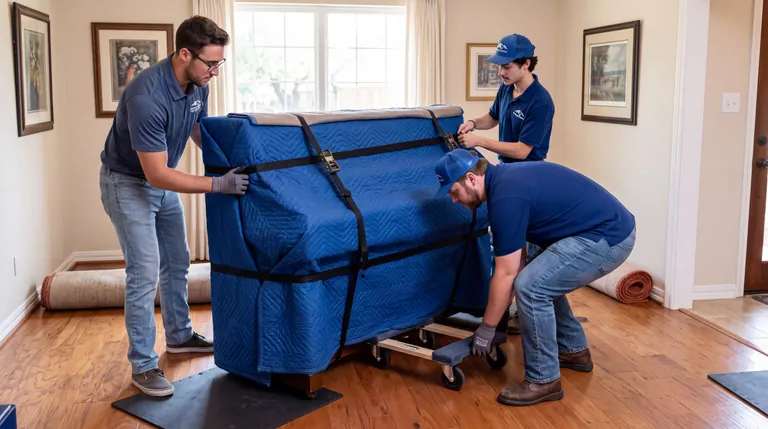
Piano & Specialty Moving
Careful handling for pianos, gun safes, and heavy or high-value specialty items.
Learn more arrow_forward
Senior Moving
Patient, compassionate downsizing and senior relocation with full-service packing and setup.
Learn more arrow_forwardMoving to San Antonio from Dallas: FAQ
How far is Dallas to San Antonio, and how long does the move take? expand_more
It's about 275 miles straight down I-35, roughly 4.5 to 5.5 hours of driving depending on how the Austin stretch is flowing. That makes it a comfortable one-day, load-and-deliver move in most cases, with delivery anywhere across San Antonio or out into the Hill Country toward Boerne, New Braunfels, or Kerrville.
Is a move from Dallas to San Antonio an interstate move? expand_more
No — it stays entirely within Texas, so it's regulated by the Texas Department of Motor Vehicles. RiverHills holds TxDMV number 009770506C for that intrastate authority, and also carries USDOT 3561425 and MC-1196218 for genuine interstate household-goods moves. Either way the move is handled in-house by RiverHills, not brokered out to another carrier.
Will my property taxes really be lower in San Antonio than in the Dallas suburbs? expand_more
Usually, yes — though not because of income tax, since neither city charges one. San Antonio homes typically carry lower values than comparable North Texas suburban homes, and they usually avoid the MUD and PID special-district assessments that inflate tax bills across newer Dallas-area master-planned communities. The annual bill you actually pay the county tends to be smaller, and you can protest your Bexar County appraisal to trim it further.
What if my Dallas home sells before my San Antonio place is ready? expand_more
RiverHills offers storage-in-transit for exactly that gap. Your belongings stay padded, blanket-wrapped, and secured until your San Antonio home is ready, then go out for delivery — so a mismatch between your Dallas closing and your move-in date doesn't force a rushed or double move.
Planning your move to San Antonio?
Share your Dallas origin, your San Antonio-area destination, target date, and inventory so the team can scope your estimate.