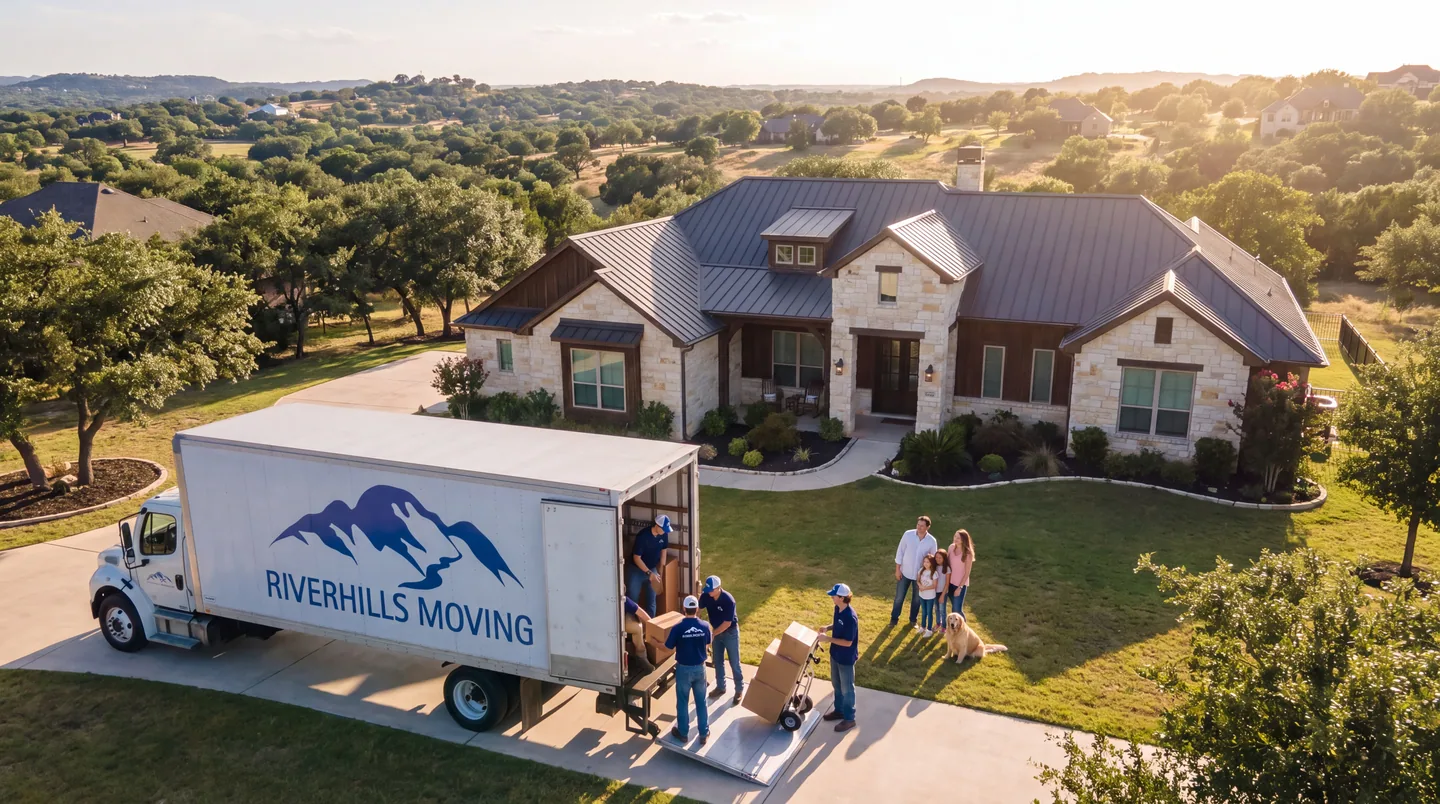
Moving to San Antonio from Denver
Relocating from Denver, CO to San Antonio or the Texas Hill Country? RiverHills — based in Boerne & Kerrville — receives and delivers your move on our own trucks and crews, with one accountable team from load to unload.
Rated 5.0★ from 500+ Google Reviews across our Kerrville, Boerne, Bulverde & Helotes locations. Licensed & insured — USDOT 3561425 · MC-1196218.
Why people move from Denver to San Antonio
The Denver → San Antonio move
The drive from Denver to San Antonio runs roughly 965 miles — a genuine two-region haul that heads south and east off the Front Range rather than a quick hop. A typical routing drops south on I-25 through Colorado Springs and Pueblo, then angles southeast across the high plains and the Texas Panhandle before joining US-87 and I-10 for the final run down into the Hill Country and San Antonio. Along the way your shipment descends from Denver's 5,280-foot elevation to a San Antonio metro that sits closer to 650–1,000 feet — a 4,000-plus-foot drop that usually swaps late-season Colorado snow risk for Texas heat by the time the truck is unloading.
Because RiverHills holds active interstate household-goods authority, this is a move we run end to end rather than handing off between carriers. One crew loads your Denver home and the same accountable team delivers into San Antonio, Boerne, Kerrville, New Braunfels, or wherever in the Hill Country you're landing — clean, padded, and blanket-wrapped on our own trucks. Long-haul moves ship on a delivery window rather than a same-day promise, so you'll get a realistic arrival range up front, a single point of contact for the whole corridor, and a crew that already knows the gated communities, caliche driveways, and low-water river crossings waiting on the receiving end.
What changes when you move from Denver
The headline swap is taxes. Colorado charges a flat 4.4% state income tax; Texas charges none, which is the single biggest reason a Denver paycheck stretches further here. Texas earns some of that back through higher property taxes — Bexar County effective rates run well above Colorado's famously low ones — but the state's homestead exemption (recently expanded) plus the absence of income tax usually net out in a transplant's favor, especially for higher earners. Sales taxes are close to a wash: San Antonio's roughly 8.25% sits just under Denver's.
On housing, the gap is dramatic. San Antonio is consistently one of the most affordable major metros in the country, while metro Denver home prices are among the highest in the interior West. The same equity that bought a compact bungalow in the Highlands or a townhome in Central Park (Stapleton) often buys a substantially larger, newer home on a bigger lot in Stone Oak, Alamo Heights, or out in the Boerne–Fair Oaks Ranch Hill Country.
Then there's the climate and pace. You're trading Denver's dry, sunny, high-desert winters — snowstorms, hail season, and thin mile-high air — for San Antonio's humid subtropical pattern: long, hot summers that regularly touch 100°F, warm and mild winters, real humidity, and no altitude to acclimate to. Expect afternoon thunderstorms instead of blizzards, cedar-fever allergy season instead of ski season, and a noticeably slower, more Tex-Mex, more military-and-family rhythm of life than fast-growing Denver's.
Where Denver transplants land in the San Antonio area
Denver transplants tend to sort themselves by what they liked about Colorado. Families coming from Highlands Ranch, Littleton, or the Tech Center gravitate to Stone Oak and the far-north 281/1604 corridor — master-planned, newer construction, strong schools. Anyone who loved Cherry Creek, Wash Park, or Congress Park usually looks at Alamo Heights, Terrell Hills, and Olmos Park for established, walkable, tree-lined charm, or the Pearl District and Southtown for a LoDo/RiNo-style urban food-and-arts scene. The outdoorsy crowd chasing the closest thing Texas has to foothills heads for the Hill Country — Boerne, Fair Oaks Ranch, Bulverde, Spring Branch, and Fredericksburg — or river-town New Braunfels and Canyon Lake, where the Guadalupe and Comal stand in for Colorado's rivers.
A few things to sort out fast: you have 90 days to get a Texas driver's license and register your vehicles, Bexar County requires an emissions test at annual inspection, and you'll want to file your homestead exemption and learn the local sport of protesting your property appraisal. Hill Country homes often run on well and septic rather than city utilities, so factor that in if you're leaving Denver's municipal services. And two very Central Texas surprises await Front Range newcomers: cedar fever (mountain-juniper pollen that peaks December–February and can flatten first-timers) and flash-flooding low-water crossings on the Guadalupe and Medina — never drive into moving water, no matter how shallow it looks.
Tips for the Denver → San Antonio move
Everything your move to San Antonio needs
One accountable crew handles packing, loading, transport, and setup for your Denver → San Antonio relocation.
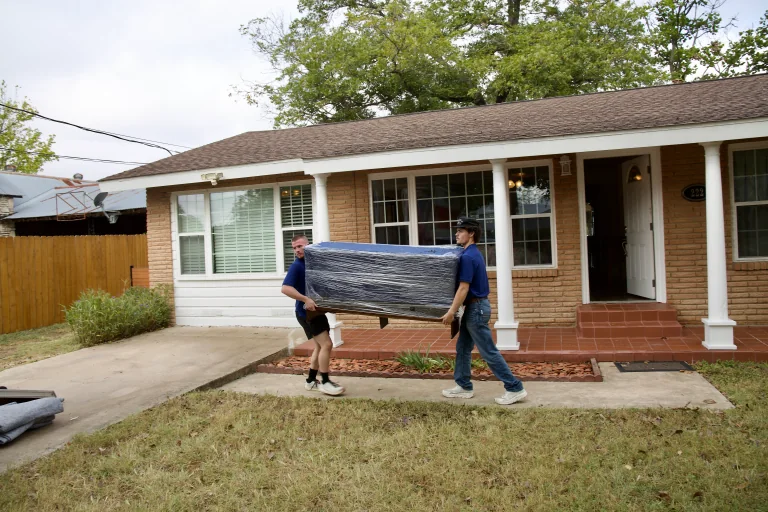
Local Moving
Full-service local moving for homes, apartments, and condos across San Antonio, Boerne, Kerrville, and the Texas Hill Country.
Learn more arrow_forward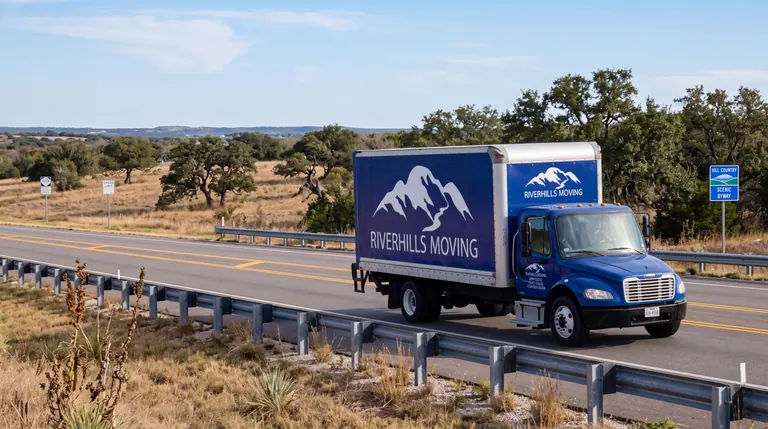
Long-Distance Moving
Interstate and cross-Texas moves out of San Antonio and the Hill Country under our own USDOT & MC authority.
Learn more arrow_forward
Commercial & Office Moving
Office, retail, and business relocations across San Antonio with minimal downtime.
Learn more arrow_forward
Packing Services
Full or partial professional packing, unpacking, and premium materials to protect what matters.
Learn more arrow_forward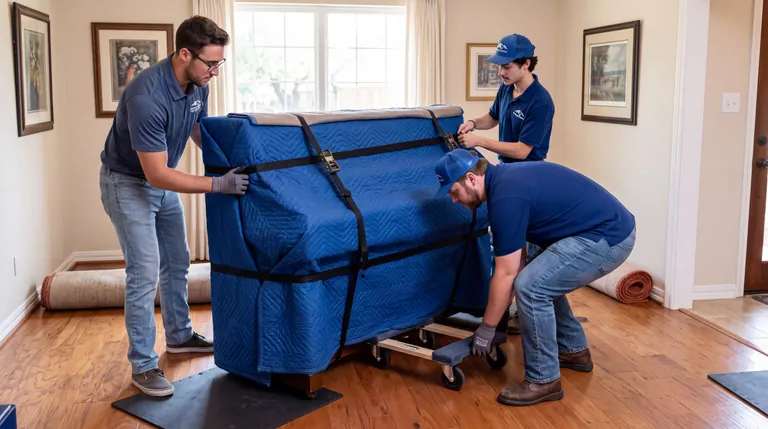
Piano & Specialty Moving
Careful handling for pianos, gun safes, and heavy or high-value specialty items.
Learn more arrow_forward
Senior Moving
Patient, compassionate downsizing and senior relocation with full-service packing and setup.
Learn more arrow_forwardMoving to San Antonio from Denver: FAQ
How long does a move from Denver to San Antonio take? expand_more
It's about a 965-mile interstate haul, so RiverHills quotes it on a delivery window rather than a same-day drop. Once your load date is set you'll get a realistic arrival range for San Antonio or the Hill Country, with the same crew handling load and unload and one point of contact for the whole corridor.
What about winter weather on the Colorado end of the route? expand_more
The Front Range and eastern Colorado plains can throw snow, ice, and ground-blizzards from late fall into spring, and I-25 out of Denver is the first leg. RiverHills plans load dates and departure timing around the forecast — and if you have flexibility, a spring or fall move sidesteps both Colorado's worst winter windows and San Antonio's peak summer heat.
Will I actually save money moving from Denver to Texas? expand_more
For most transplants, yes. Texas has no state income tax versus Colorado's flat 4.4%, and San Antonio housing is far cheaper than metro Denver. The main offset is higher Texas property taxes, though the homestead exemption softens that. Every situation is different, which is why RiverHills quotes the move itself custom rather than by a published rate.
Can RiverHills handle the whole interstate move, or just the local delivery in San Antonio? expand_more
The whole thing. RiverHills holds active interstate household-goods authority, so one crew loads your Denver home and the same team delivers into San Antonio, Boerne, Kerrville, New Braunfels, or anywhere in the Hill Country — clean, padded, and blanket-wrapped on our own trucks, with no carrier hand-off in the middle.
Planning your move to San Antonio?
Share your Denver origin, your San Antonio-area destination, target date, and inventory so the team can scope your estimate.