verified Request a move-specific estimate and review the written scope before booking.
Commercial Service

Modular Workstation Moving in San Antonio

Freestanding bench runs and sit-stand desks travel as mapped assemblies, with powered parts and cable paths handled under your dealer's instructions.

(830) 329-7272
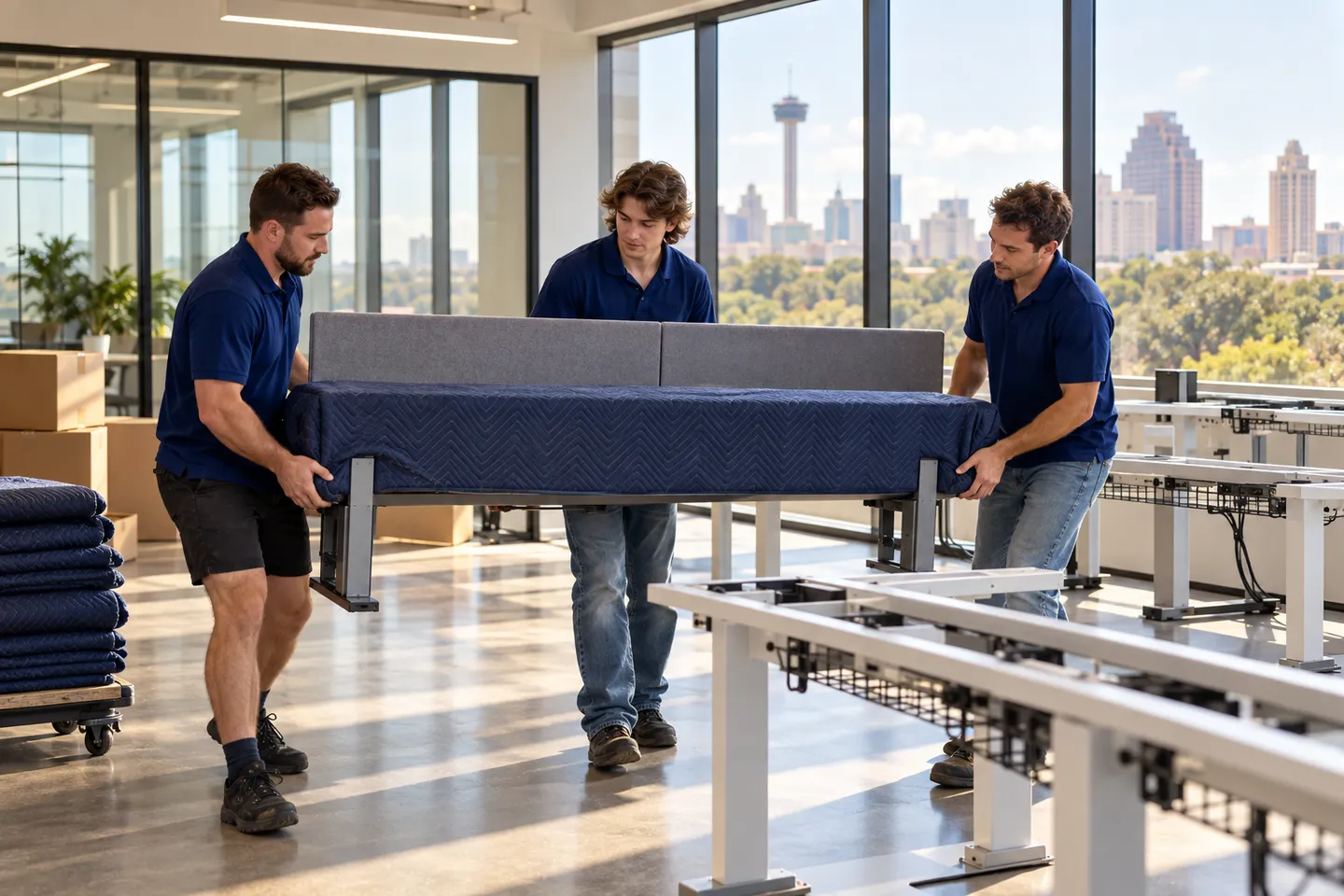
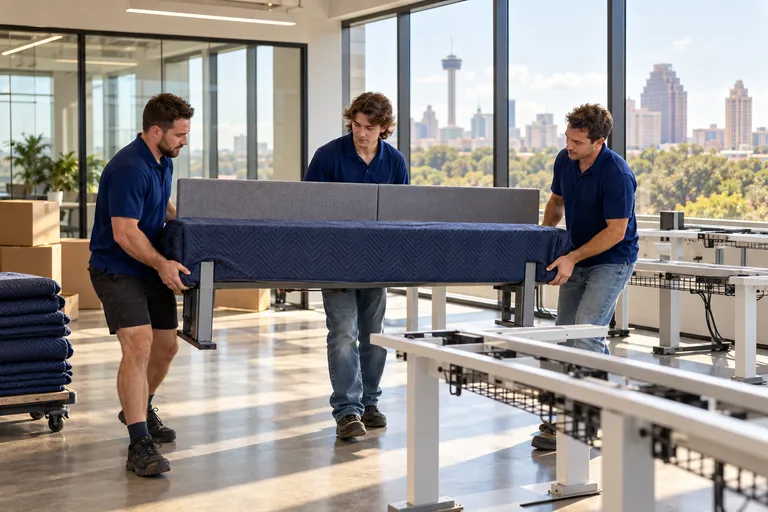
Modular Workstation Moving moving in San Antonio: moving crew at work
  • Licensed & Insured USDOT 3561425 · MC-1196218
  • 5.0 ★ Rated 500+ Google Reviews
  • San Antonio & Hill Country Kerrville · Boerne · Fredericksburg

Start your free commercial move quote

verified For estimate purposes only credit_card_off No credit card required

How We Plan Modular Workstation Moving

Freestanding benching looks simple from across an open office: long shared tops, legs, and a central spine. Underneath sit linked frames, cable trays, modesty panels, and both fixed and powered desk positions. If those parts arrive without a position map, a bench can be assembled in the wrong order or block the path reserved for its wiring.

We start with your facilities coordinator's new seating plan and the furniture dealer's assembly guidance. Each bench run gets an orientation, each sit-stand base gets a destination, and loose brackets or fasteners stay identified with the piece they fit. Before lifting, your IT contact clears devices and loose leads from the worktops. Our crew then separates the furniture at approved joints, pads the tops and frames, and places the components where the new run will stand. Your dealer handles any settings or adjustments the powered bases require. In a broader office move, we place these freestanding frames and cable spines to the seating plan; panel cubicles follow a different assembly plan.

Who usually signs off
Facilities coordinator or office manager, with the furniture dealer confirming the new workstation layout
Timing that works
Plan around the last occupied work period and the furniture dealer's setup visit; ask about an evening or weekend window if the building permits it.

What typically moves

  • Freestanding bench runs Shared tops and linked legs are marked by run and orientation so the receiving layout does not reverse the seating order.
  • Sit-stand desk bases Each base travels with its assigned top and hardware, subject to the furniture dealer's handling instructions for the lifting mechanism.
  • Worktops and return surfaces We protect exposed edges and label the underside to show which frame and destination position each surface belongs to.
  • Cable trays and central spines Empty trays and spine covers are tagged to their bench run; your cabling contact clears the paths before separation.
  • Modesty panels and desk screens Removable panels are wrapped individually and grouped with the frame positions where they will be fitted again.
  • Mobile pedestals and under-desk drawers Drawers are secured, and each unit is labeled for the desk position it serves on the new plan.

Access and scheduling

A bench run occupies more floor area while it is apart than while people are seated at it. We ask your office contact to identify a staging area that will not cover exits, shared corridors, or the furniture dealer's assembly space. The receiving plan should show row direction, aisle widths, and the positions of sit-stand bases before the first top comes off. If a run changes length, the dealer needs to confirm which linking pieces and supports the new arrangement requires.

We check the loading door, freight elevator, and turns against the longest worktop and frame section. Building management may require a Certificate of Insurance, an elevator reservation, floor protection, or an evening access window. Your facilities coordinator confirms when each row can be cleared; the dealer and cabling contact confirm when their work can follow placement. We sequence rows so separated parts have a clear path to the truck and a marked place on arrival.

Protection and handling

We photograph the furniture layout for orientation, then label the underside of tops, the frame sections, and the bags of fasteners by bench run and seat position. Worktop edges receive padding before a section passes through doors or onto a cart. Frames are secured so feet, crossbars, and lifting columns cannot strike the finished surfaces beside them. Empty cable trays and covers are kept with the run they came from.

Sit-stand bases need particular care around motors, control boxes, and leads attached to the frame. Your furniture dealer identifies the safe lift points, travel position, and any parts that should stay assembled. Our crew follows that guidance for the physical furniture move and stops if a base or connector differs from the plan. At the destination, we set frames and tops in their marked positions and keep the cable paths accessible. The dealer completes powered-base setup, while your IT and cabling contacts return devices and route their leads.

Who does what

Some of this job belongs to other trades. The written plan names each one.

Sit-stand mechanisms and furniture configuration
Your furniture dealer supplies separation and lifting instructions, confirms parts for the new layout, and checks powered-base setup. Our crew moves and places the released furniture sections.
Devices and cable routing
Your IT and cabling contacts clear devices and leads before teardown, then route and test them after the furniture is placed. Our crew keeps trays and spines identified with their runs.
Connections to building power
Your licensed electrician handles any electrical disconnect or reconnect at the building. The moving crew handles the freestanding furniture after that work is complete.

Not part of our work

  • Programming or repairing a sit-stand motor or control box; the furniture dealer or equipment vendor checks those components.
  • Designing a new bench configuration or supplying missing supports and connectors; your furniture dealer approves and supplies the parts.

Around San Antonio and the Hill Country

In San Antonio offices along Loop 1604, US-281, and downtown, an open floor may still have a narrow freight route between the benching area and the loading point. The same measuring step matters in smaller offices toward Boerne and Kerrville. We plan section lengths against the actual doors and elevator before the row is separated.

The crew that shows up

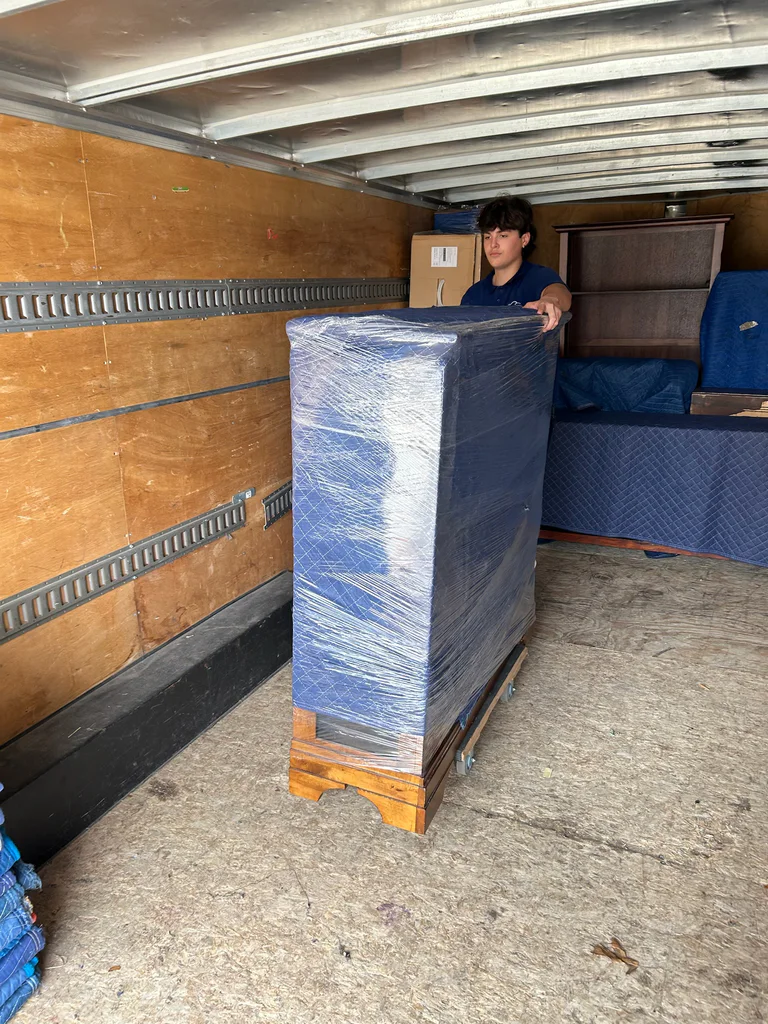
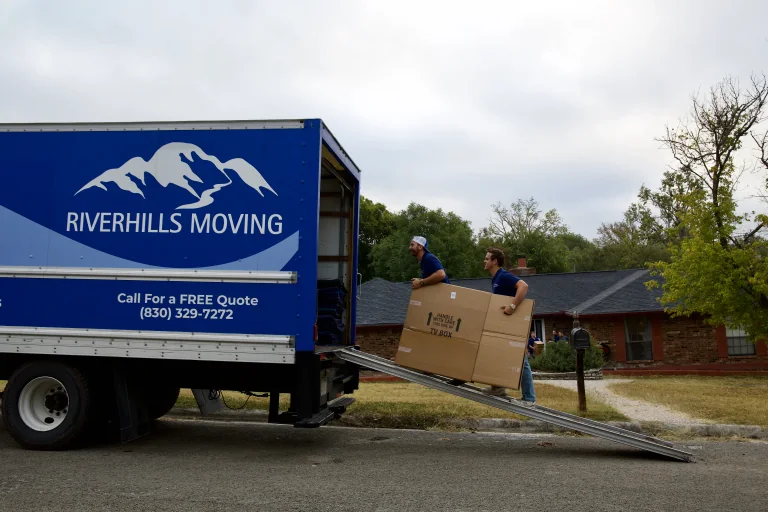
Crew shrink-wrapping furniture before loadingCrew loading the box truckCrew carrying pad-wrapped furniture to the truck

Modular Workstation Moving FAQs

Another question? Call (830) 329-7272.

Can a shared bench run keep the same seating order after the move?

Yes, if the new floor plan shows run direction and seat positions. We mark tops, frames, trays, and hardware to that map before separation. If the room reverses the run or changes its length, your dealer should confirm the required supports and linking parts before we schedule assembly.

Who decides how our sit-stand bases come apart for transport?

Your furniture dealer or equipment vendor should provide model-specific lift points, travel position, and guidance on which motor or control parts remain attached. We use those instructions for the physical move. If a base has damaged or unfamiliar fittings, we flag it for the dealer before handling.

What happens to the cable trays and spine covers under our benches?

Your IT or cabling contact clears devices and leads from those paths. We label the empty trays and covers by bench run, protect their edges, and keep fasteners with them. At the new floor, we place them with the correct row for your cabling contact to restore.

When should the new bench positions be marked on the floor?

Before the furniture arrives. The plan should show run direction, aisle clearance, sit-stand positions, and each spine location. Your facilities coordinator and dealer approve that layout. We can then carry each frame section to its position without shifting assembled rows across the finished floor.

Plan your business move

Tell us both addresses, the building rules you know about, and the dates you cannot move. We will send back a written plan and estimate.

Call (830) 329-7272

Mon–Fri 8 AM–6 PM · Sat 9 AM–4 PM · Sun Closed

Call Now call 830-329-7272