verified Request a move-specific estimate and review the written scope before booking.
Commercial Service

Restaurant Equipment Moving in San Antonio

Your licensed trade prepares connected equipment; we move agreed freestanding units, labeled smallwares, and dining room pieces through the approved route.

(830) 329-7272
Restaurant Equipment & Smallwares Moving moving in San Antonio: moving crew at work
  • Licensed & Insured USDOT 3561425 · MC-1196218
  • 5.0 ★ Rated 500+ Google Reviews
  • San Antonio & Hill Country Kerrville · Boerne · Fredericksburg

Start your free commercial move quote

verified For estimate purposes only credit_card_off No credit card required

How We Plan Restaurant Equipment & Smallwares Moving

Each kitchen station has a line between what the trade disconnects and what our crew can carry. Your licensed trade prepares connected units and releases them for handling. We list only the freestanding pieces your team and that trade have cleared: mobile prep tables, loose racks, service carts, and equipment that can travel under its maker's instructions. Built-in work stays with the installer.

Mark each movable unit on the new kitchen drawing. A prep table meant for garde manger should not land in the dish area simply because it fits through that door first. Your chef identifies stations and decides which items remain in use through final service. We can pack released smallwares by station, pad larger pieces, and place them against the drawing. Tables, chairs, host stands, and movable service stations follow the dining room layout. Trade visits set the order, and nothing connected leaves its station until its specialist releases it.

Who usually signs off
Restaurant owner or operations manager, with the chef confirming kitchen station assignments
Timing that works
Plan from final service and the receiving kitchen's readiness; ask about evening or weekend windows after the property confirms access.

What typically moves

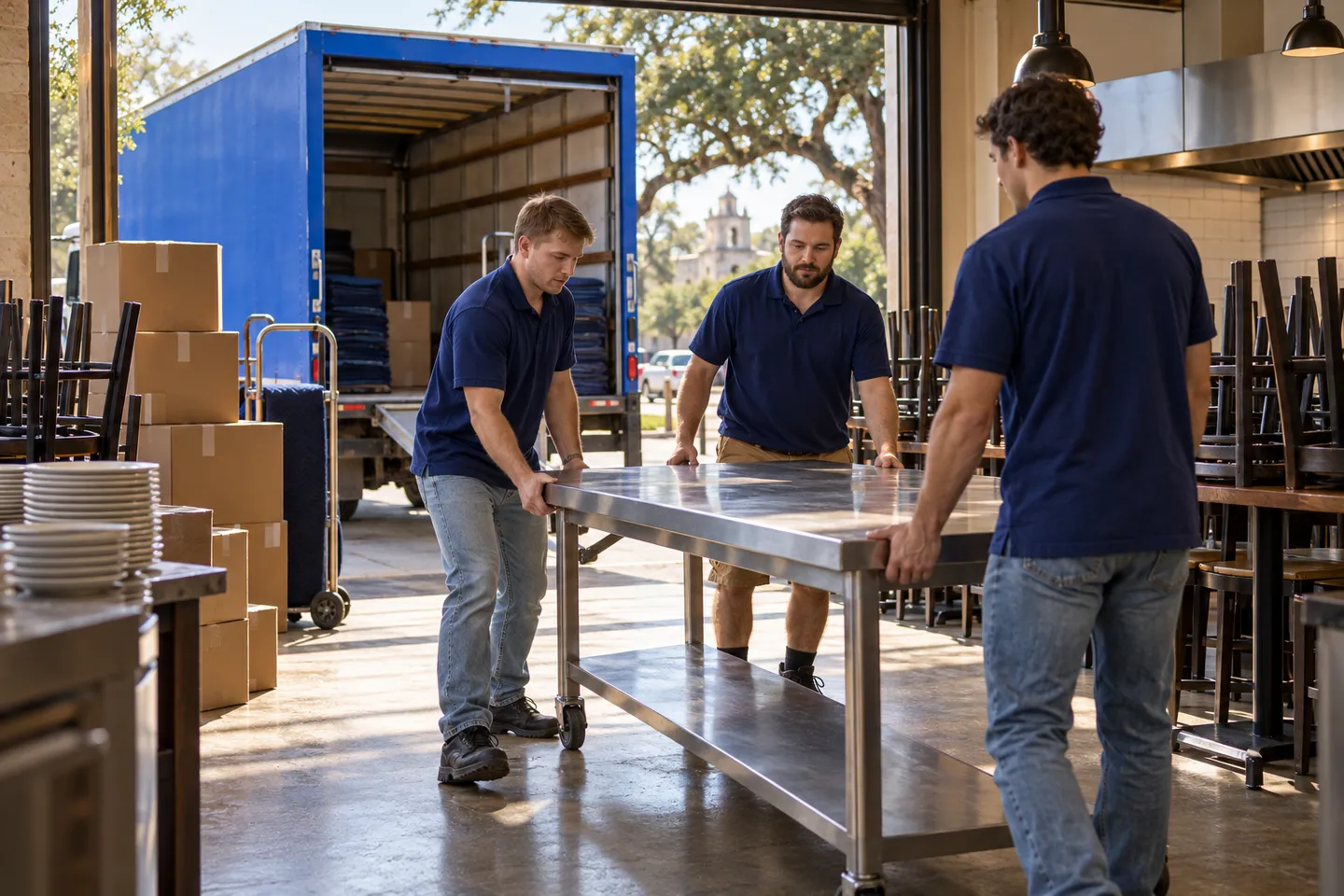
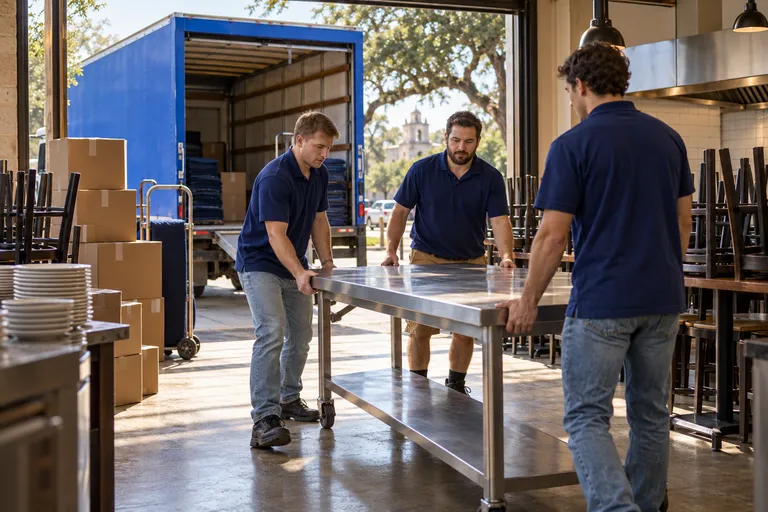
  • Mobile stainless prep tables Shelves and loose inserts are removed or secured; each table carries the kitchen station shown on your receiving drawing.
  • Freestanding cooking units released by the trade We confirm release and handling instructions before listing a unit for transport, then plan its route by dimensions and weight.
  • Rolling ingredient bins and speed racks Bins are emptied and cleaned by your staff; rack shelves and trays are counted and marked for their station.
  • Pots, pans, sheet trays, and utensils Dry smallwares are packed by use area so prep, line, and dish supplies do not merge in one carton.
  • Plates, glassware, and flatware Dining service pieces are cushioned and labeled by the storage cabinet or service station chosen by your team.
  • Dining tables, chairs, and host stand Removable leaves and bases stay identified with their tables; the host stand lands at the entrance marked on the plan.
  • Freestanding bus and service carts Loose bins travel separately, with cart labels showing whether they belong on the floor, at the pass, or in back of house.

Access and scheduling

Your chef may keep one station active through final service while the rest is packed. The trade prepares connected units, and our crew takes only pieces cleared for the load. At the new address, the installer needs room to position and commission equipment. We plan deliveries so smallwares and dining chairs do not fill that area first.

Send the landlord's move rules for both addresses: service entrance, dock or alley window, floor protection, and shared corridors. We measure those routes against released units and ask where the truck may stand. Tell us the clear width of every kitchen door. If either property requires a Certificate of Insurance, provide its wording before scheduling. Ask about evening or weekend work once management confirms the loading window.
Protection and handling

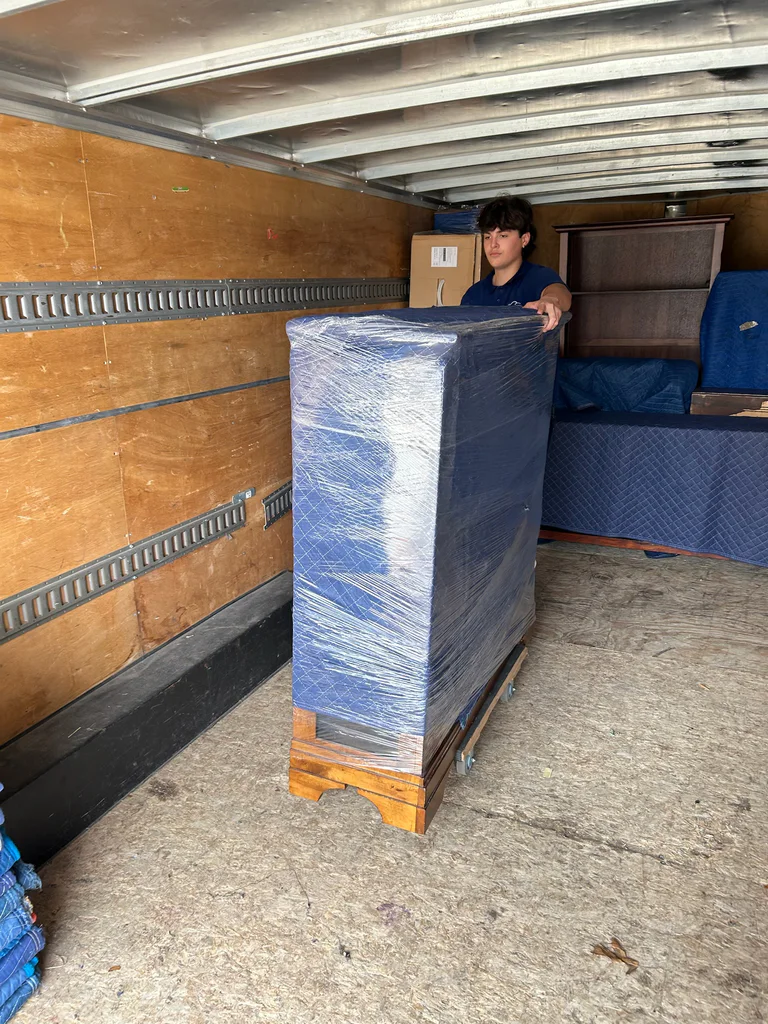
Your kitchen team empties, cleans, and dries food-contact equipment and separates anything needed for final service. We label each agreed movable unit by station and keep shelves, trays, and detachable guards with the parent piece. Exposed stainless edges receive padding; casters are secured for the carry. A unit with a special transport orientation stays off the load until its vendor provides instructions.

Smallwares move in marked cartons: glassware cushioned apart from metal tools, sharp utensils contained by your team or packed to an agreed safe method, and sheet pans grouped by size. We pad dining table tops and chair contact points, then place them from the seating plan. Your chef checks kitchen placement, while the equipment vendor or licensed trade handles setup and operational checks. Our crew carries and places released pieces, leaving installed work to those specialists.

Who does what

Some of this job belongs to other trades. The written plan names each one.

Connected ranges, fryers, dish machines, and refrigerated units
The appropriate licensed trade disconnects gas, water, refrigerant, and electrical connections as applicable, then releases each movable unit. The trade or equipment vendor reinstalls and checks it at the destination. We carry only released freestanding units under their handling instructions.
Hoods, walk-in rooms, fixed counters, and built-in sinks
Your installer or property contractor decides what remains and handles any permitted alteration. Installed pieces are outside our moving load.
Food stock and opening inventory
Your chef decides what is used, discarded, or transported under the restaurant's food-handling plan. We can pack clean, dry smallwares and assigned sealed supplies.

Not part of our work

  • Disconnecting or reconnecting gas, water, refrigerant, or electrical connections; the appropriate licensed trade performs that work.
  • Removing or transporting installed hoods, walk-in rooms, fixed counters, or built-in sinks as part of the moving load.
  • Testing, calibrating, or placing kitchen equipment back into service; your vendor or trade signs off on operation.

Around San Antonio and the Hill Country

San Antonio kitchens differ: River Walk and downtown spaces open onto shared alleys with landlord-set receiving hours, Pearl-area buildings share docks, and Loop 1604 pad sites may have a rear door beside a drive-through lane. Fiesta week is a poor time to block a downtown alley. In Boerne and Fredericksburg, an older kitchen door may be narrower than a modern range.

The crew that shows up

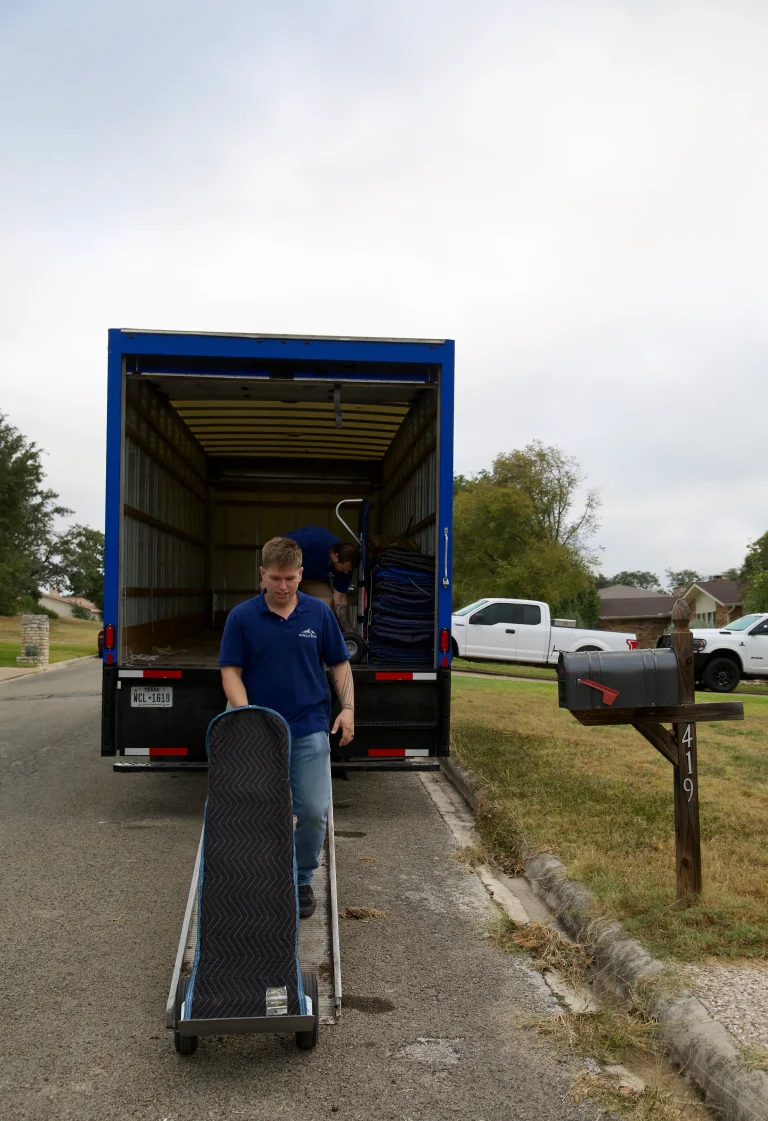
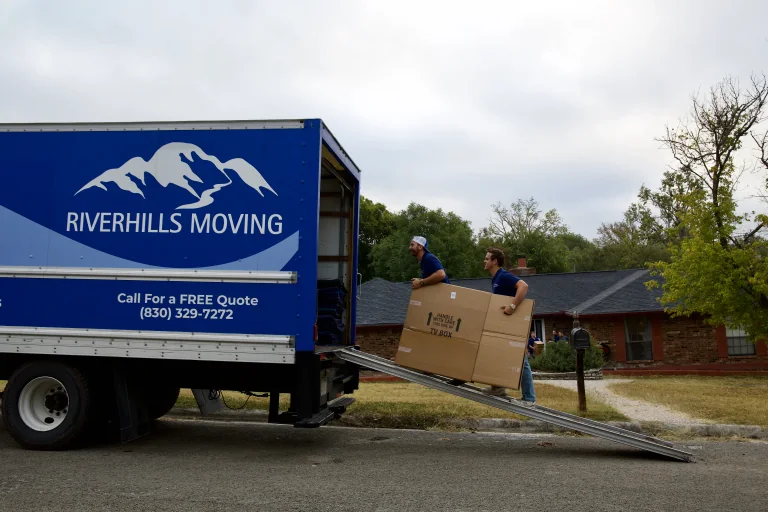
Crew loading the box truckCrew carrying pad-wrapped furniture to the truckLoaded hand dolly at the truck ramp

Restaurant Equipment & Smallwares Moving FAQs

Another question? Call (830) 329-7272.

What tells you a cooking unit is ready to go on the truck?

Your licensed trade or equipment vendor releases the unit and provides transport instructions, including how it should be secured and positioned. We compare those instructions with the route and inventory before loading. If a unit is still attached or its preparation is unclear, it stays until the responsible specialist resolves it.

Do undershelves and casters stay on a prep table or travel separately?

It depends on the table and the route. Undershelves and loose inserts usually come off so the frame is lighter and nothing shifts in transit. Casters can stay on when they lock and the path is smooth, and come off when a threshold or ramp would catch them. Removed parts are bagged and labeled to the table's station either way.

How do you handle a narrow door between the dock and our cook line?

We need the clear opening, turns, thresholds, and unit dimensions before finalizing the load. We can plan a route for a released freestanding piece and carry removable shelves separately when its instructions allow. If the unit cannot pass safely, your equipment vendor or installer decides the next method.

Can dining room setup happen while the kitchen installer is working?

Often, if the routes and work zones stay separate. Give us the seating plan and tell us which service path the installer needs. We can place tables, chairs, and the host stand on the dining side while keeping smallwares away from kitchen work. Your operations lead checks the layout.

Plan your business move

Tell us both addresses, the building rules you know about, and the dates you cannot move. We will send back a written plan and estimate.

Call (830) 329-7272

Mon–Fri 8 AM–6 PM · Sat 9 AM–4 PM · Sun Closed

Call Now call 830-329-7272