verified Request a move-specific estimate and review the written scope before booking.
Retail, Restaurant & Hospitality

Boutique & Showroom Moving in San Antonio

Move the pieces that make your floor recognizable, from freestanding displays and mannequins to mirrors and portable lights.

(830) 329-7272
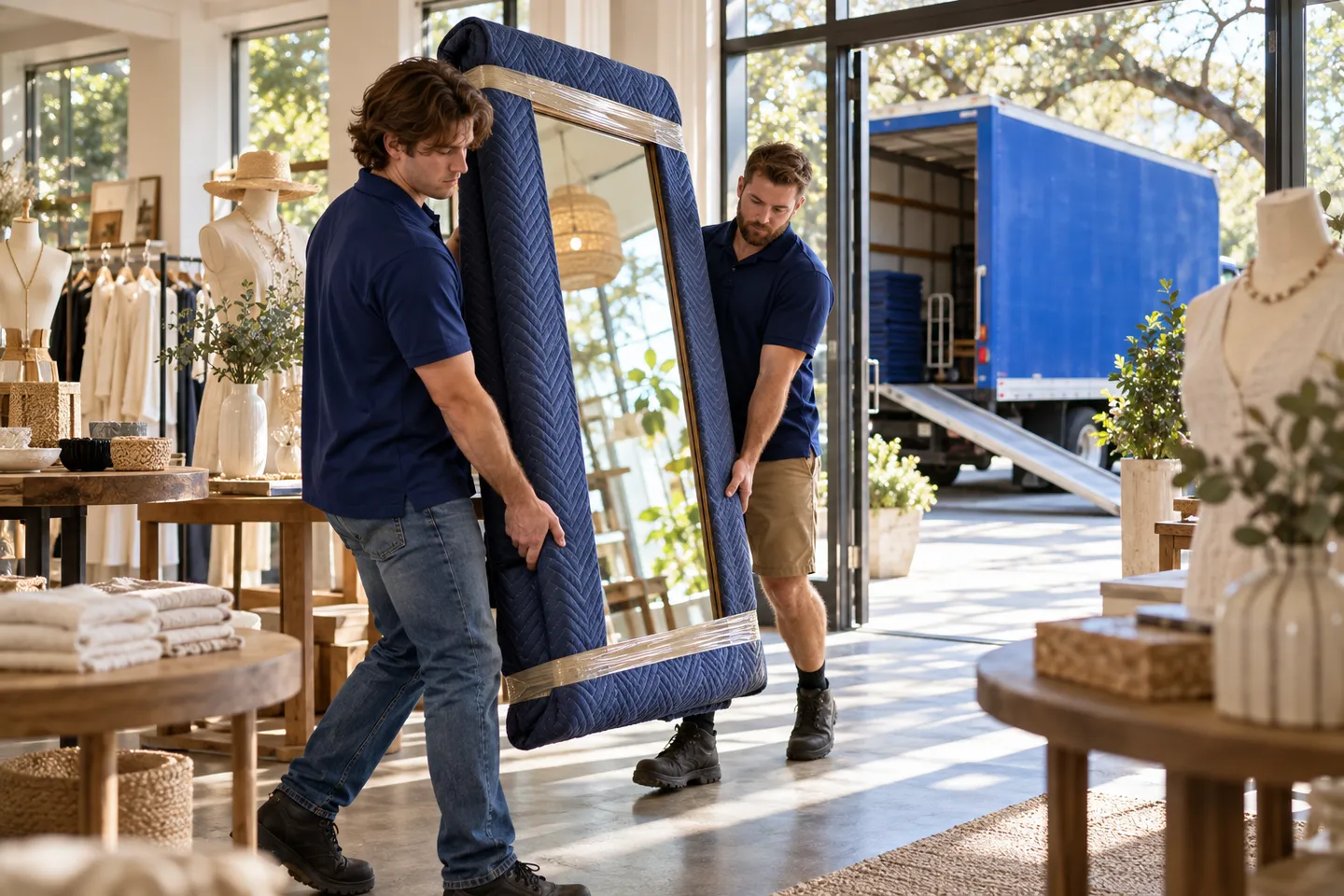
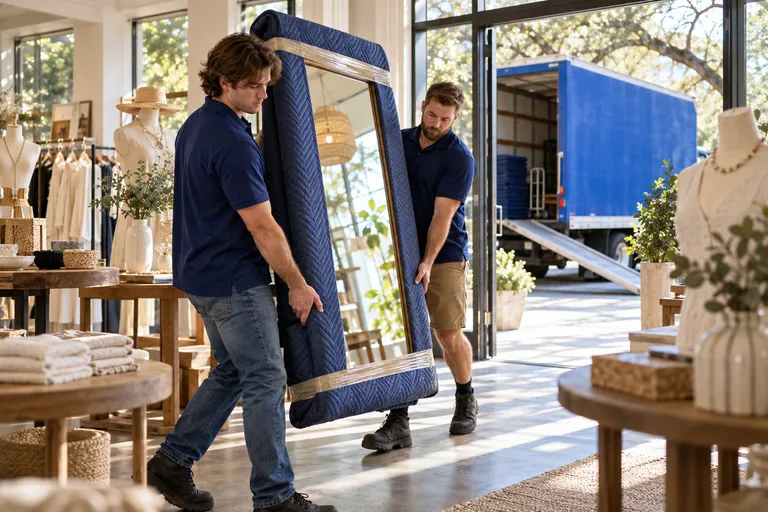
Boutique & Showroom moving in San Antonio: moving crew at work
  • Licensed & Insured USDOT 3561425 · MC-1196218
  • 5.0 ★ Rated 500+ Google Reviews
  • San Antonio & Hill Country Kerrville · Boerne · Fredericksburg

Start your free boutique & showroom move quote

verified For estimate purposes only credit_card_off No credit card required

Planning a Boutique & Showroom Move

A boutique sells through what a shopper sees from the door. The sightline to a featured display, the mirror beside the fitting area, and the light that falls on both all decide how the new room works. We translate your owner or showroom manager's decisions into a list of movable pieces and a placement plan before the floor is cleared.

Freestanding display tables and garment rails can travel in sections. Mannequins need their limbs and bases kept with the correct forms. Large mirrors need their frame, mounting method, and route through the new doorway checked before they are packed. Portable lamps can move with their shades and cords identified, while attached lighting needs the appropriate trade or fixture vendor.

At delivery, we place each marked piece against your new floor plan, leaving the final styling and product arrangement to your team. Mannequins and mirrors come off the truck first because they anchor the layout, and garment rails fill in around them.

Who usually signs off
Boutique owner or showroom manager who approves the new floor arrangement
Timing that works
Plan the floor change after the final selling period and before the next opening; ask about evening or weekend access when the property permits it.

What typically moves

  • Freestanding display tables and plinths Mark each piece to its intended floor position; separate removable tops or legs and keep their fittings with that piece.
  • Mannequins and dress forms Remove garments first, then identify detachable arms, hands, bases, and stands to the form they fit.
  • Floor and wall mirrors released for moving Measure the frame and carry route; protect the glass face and keep hanging hardware identified with its mirror.
  • Portable display lamps and shades Unplug lamps, separate fragile shades, and mark each cord and component for its planned display position.
  • Garment rails and accessory stands Bundle rails by display group, with feet, crossbars, and fasteners labeled to the matching stand.
  • Showroom sample pedestals and presentation cases Empty each case and identify removable shelves or inserts before padding the finished surfaces.

Access and scheduling

Send the old and new floor plans. We need to know which mirrors are freestanding, which are fixed, and which lights plug into an outlet. Your team clears merchandise from display pieces and chooses the items that will travel. Mark each piece on the receiving plan while keeping the entry path clear.

Storefront access varies. A street-facing boutique may have only a front door, while a showroom in a shopping center may use a service corridor with restricted carts or hours. We check the longest rail and widest mirror against both routes, ask who reserves the loading space, and request any building move instructions. If management requires a Certificate of Insurance, share its requirements before scheduling. Ask about an evening or weekend slot if management permits it.

Protection and handling

We start with the visible surfaces. Finished display edges receive padding, mirror faces receive appropriate protection, and each glass piece is carried in an orientation suited to its frame. We keep mirror hardware in a labeled packet rather than leaving loose hooks against the glass. For mannequins, removable parts are wrapped separately and identified to the matching torso and base.

Portable lighting travels after bulbs and fragile shades are removed or protected according to the fixture. We label the lamp and its shade to the same destination display, then place them for your team to plug in and aim. If a mirror or light is attached to the building, your installer or licensed trade releases it and handles its new attachment. Our crew moves only the released, transportable components identified in the plan.

Who does what

Some of this job belongs to other trades. The written plan names each one.

Hardwired display lighting and building circuits
A licensed electrician disconnects and reconnects attached lighting and tests it. We move portable lamps and any released components listed for transport.
Wall-mounted mirrors and built-in display elements
Your fixture installer or property-approved contractor confirms ownership, removes the attachment, and reinstalls it at the new space. We can carry a released piece if its dimensions and protection are planned.
Merchandise and visual presentation
Your owner or merchandising team selects, counts, and places product and approves the finished display. We move and position the labeled furnishings and fixtures.

Not part of our work

  • Disconnecting or installing hardwired lighting; a licensed electrician handles that work.
  • Removing a mirror or fixture attached to a leased wall before the property owner and installer authorize its release.
  • Counting merchandise or deciding the final styling of mannequins and product displays.

Around San Antonio and the Hill Country

San Antonio boutiques often sit where parking is short: the Pearl, Southtown, and the Alamo Heights stretch of Broadway, where a truck may need a loading zone or a time outside store hours. Newer lifestyle centers along I-10 and Loop 1604 have service corridors with their own rules. On Main Street in Fredericksburg and Boerne, weekday mornings are easier than weekends.

The crew that shows up

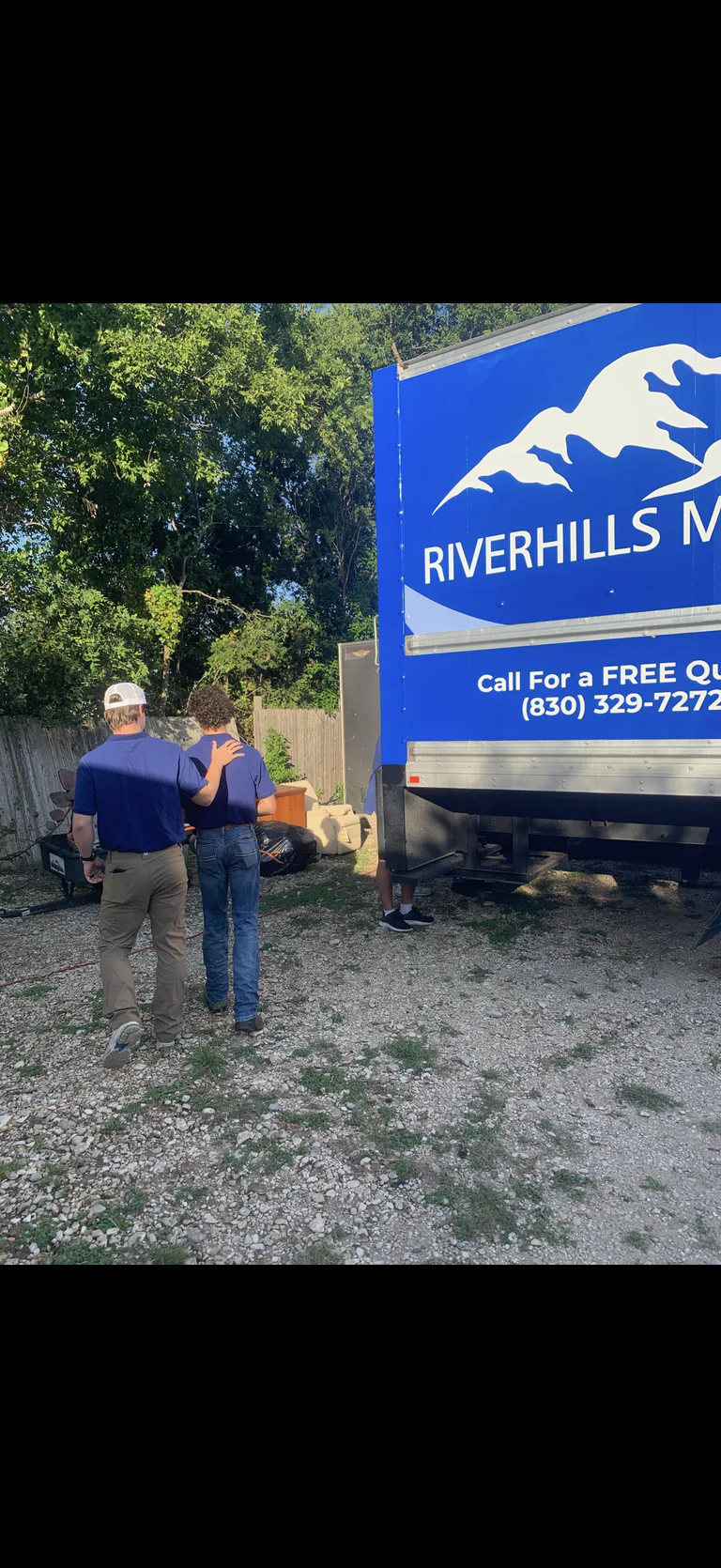
Labeled moving boxes staged for loadingRiverHills Moving crew beside the company box truckRiverHills Moving crew standing together by the truck

Boutique & Showroom Moving FAQs

Another question? Call (830) 329-7272.

How should we mark mannequin parts when several forms look alike?

Give each form a display position on the new floor plan. We can label the torso, base, and the carton holding its detachable parts with that position, then keep the parts together through delivery. Your team should remove garments and accessories first and point out any fragile hands or custom fittings so they receive separate protection.

Can a large fitting-room mirror travel to the new boutique?

First confirm that the mirror belongs to you and may be removed from the wall. Share its dimensions and a photo of its frame and mounting points so we can check both carrying routes. Your installer releases and later mounts an attached mirror; we can protect and move it after release if the frame and access allow it.

What happens to the lighting aimed at our feature display?

Portable lamps can be labeled to the display position, packed with their shades and cords identified, and placed where your team wants them. Attached or hardwired fixtures need your electrician or fixture vendor to remove and reinstall them under the property's rules. Your merchandising lead then aims the lights and checks how the products appear in the new room.

Should we decide the new showroom layout before moving day?

A marked plan helps, even if it is a simple sketch. Show the entry path, fitting area, mirror locations, display tables, and places that must stay clear for installers. We can label movable pieces to those positions and unload in an order that keeps access open. Your team can adjust styling after the main pieces are placed.

Plan your business move

Tell us both addresses, the building rules you know about, and the dates you cannot move. We will send back a written plan and estimate.

Call (830) 329-7272

Mon–Fri 8 AM–6 PM · Sat 9 AM–4 PM · Sun Closed

Call Now call 830-329-7272